


Henry Madin
Artist Info
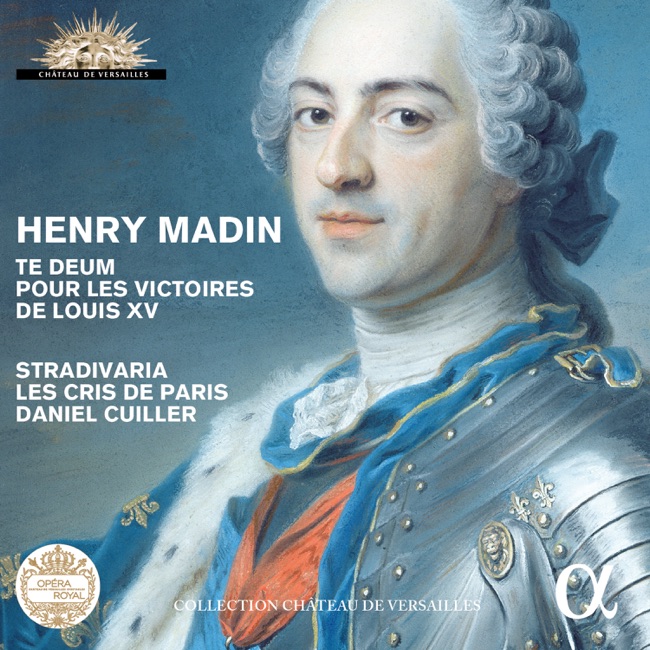
Role:ComposerBirth:1698Death:1748Henry Madin was a French composer and organist who lived during the Baroque period. He was born in 1698 in the city of Paris, France. His father, Jean Madin, was also a musician and served as the organist at the Church of Saint-Sulpice in Paris. It was under his father's tutelage that Henry Madin began his musical education. Madin's talent for music was evident from a young age, and he quickly became a skilled organist and composer. He studied at the Royal College of Music in Paris, where he was a student of André Campra, a prominent French composer of the time. Madin's studies at the college were focused on composition, and he quickly gained a reputation as a talented composer. In 1727, Madin was appointed as the organist at the Church of Saint-Eustache in Paris, a position he held for the rest of his life. During his time at Saint-Eustache, Madin composed a number of works for the church, including masses, motets, and hymns. His compositions were well-received by the church's congregation, and he became known as one of the leading composers of sacred music in France. Madin's compositions were characterized by their use of counterpoint and their intricate harmonies. He was particularly skilled at writing for the organ, and many of his works feature complex organ solos and accompaniments. His music was also notable for its use of chromaticism, a technique that was not commonly used in Baroque music. One of Madin's most famous works is his "Messe des morts," or Requiem Mass. The piece was composed in 1741 and was written in memory of Louis XV's father, Louis, Duke of Burgundy, who had died the previous year. The Requiem Mass is a large-scale work that features a choir, soloists, and orchestra. It is divided into nine movements, each of which is based on a section of the traditional Requiem Mass. The "Messe des morts" is notable for its use of dramatic contrasts and its powerful emotional impact. The piece begins with a somber and mournful opening movement, which sets the tone for the rest of the work. The second movement, a "Dies Irae," is particularly dramatic, featuring a powerful choir and orchestra that create a sense of impending doom. The final movement, a "Libera me," is a moving and emotional conclusion to the piece, with the choir and soloists singing a prayer for the soul of the deceased. In addition to his sacred music, Madin also composed a number of secular works, including operas and ballets. His opera "Les Saisons" was particularly well-received and was performed at the Paris Opera in 1730. The opera is a pastoral work that tells the story of the four seasons and features a number of colorful and lively dance numbers. Madin's music was highly regarded during his lifetime, and he was considered one of the leading composers of his time. His works were performed throughout France and were also popular in other European countries. However, after his death in 1748, his music fell out of favor and was largely forgotten. It was not until the 20th century that Madin's music began to be rediscovered and appreciated once again. Today, his works are performed and recorded by a number of ensembles and musicians, and he is recognized as one of the most important composers of the French Baroque period. His music continues to inspire and move audiences around the world, and his legacy as a composer and organist lives on.More....
Copyright Ⓒ 2013 Davinci Finger. All rights reseved
Service Terms & Policy