


David W. Rogers
Released Album
Concerto
-
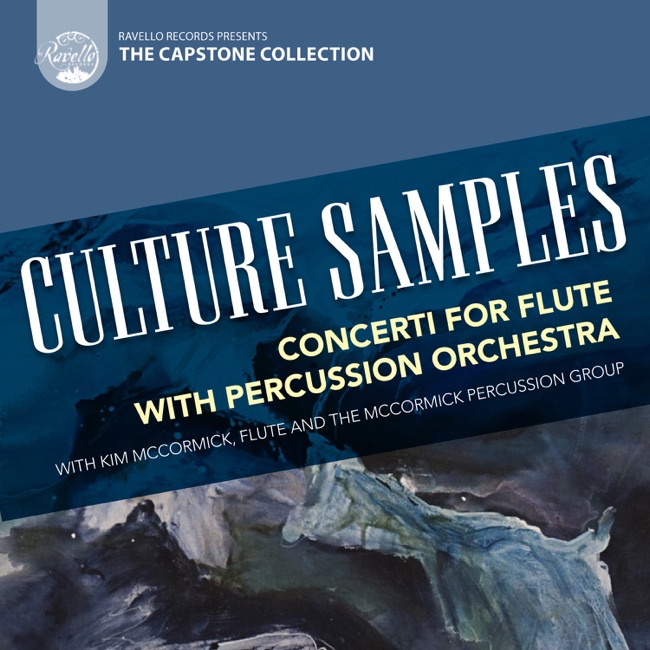 September 9, 2008
Chamber
-
 November 14, 2000
Artist Info
Role:ComposerDavid W. Rogers was a classical music composer who was born on May 12, 1950, in New York City. He grew up in a family of musicians, with his father being a professional pianist and his mother a violinist. From a young age, Rogers showed a keen interest in music and began playing the piano at the age of four. Rogers received his formal music education at the Juilliard School in New York City, where he studied composition under the tutelage of renowned composers such as Milton Babbitt and Elliott Carter. He also studied piano and conducting, which helped him to develop a well-rounded understanding of music. Throughout his career, Rogers composed a wide range of works, including orchestral pieces, chamber music, and solo piano works. His music was known for its complexity and technical virtuosity, as well as its emotional depth and expressive power. One of Rogers' early works was his Piano Sonata No. 1, which he composed while still a student at Juilliard. The piece is a tour-de-force of technical skill, with intricate rhythms and complex harmonies that challenge even the most skilled pianists. Despite its difficulty, the sonata is also deeply expressive, with moments of intense emotion and lyrical beauty. Another notable work from Rogers' early career is his String Quartet No. 1, which he composed shortly after graduating from Juilliard. The piece is a masterful example of the genre, with intricate counterpoint and rich harmonies that showcase Rogers' skill as a composer. The quartet has been performed by many of the world's leading ensembles and is considered a classic of the modern string quartet repertoire. In the 1980s, Rogers began to experiment with electronic music, incorporating synthesizers and other electronic instruments into his compositions. One of his most famous works from this period is his Symphony No. 3, which features a large electronic component alongside a traditional orchestra. The piece is a powerful exploration of the intersection between acoustic and electronic music, with moments of intense beauty and haunting dissonance. Throughout his career, Rogers was also known for his collaborations with other artists, including choreographers, visual artists, and poets. One of his most famous collaborations was with the choreographer Mark Morris, with whom he worked on several ballets, including "The Hard Nut" and "L'Allegro, il Penseroso ed il Moderato." Rogers' music was a perfect match for Morris' choreography, with its intricate rhythms and expressive melodies providing a rich and varied palette for the dancers. In addition to his work as a composer, Rogers was also a respected teacher and mentor. He taught composition at several universities, including the University of California, Berkeley, and the University of Michigan. Many of his students went on to become successful composers in their own right, and Rogers' influence can be felt in the work of many contemporary composers. Sadly, Rogers' career was cut short when he passed away in 1995 at the age of 45. However, his legacy lives on through his music, which continues to be performed and admired by musicians and audiences around the world. His contributions to the world of classical music are significant, and his influence can still be felt in the work of many contemporary composers.More....
Recent Artist Music
Copyright Ⓒ 2013 Davinci Finger. All rights reseved
Service Terms & Policy