


Adolf Wiklund
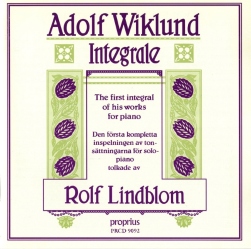
Released Album
Keyboard
-
 November 10, 2009
 -
 March 4, 1998
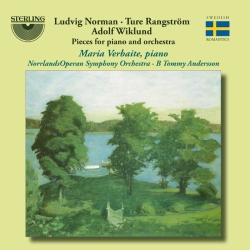
Concerto
Artist Info
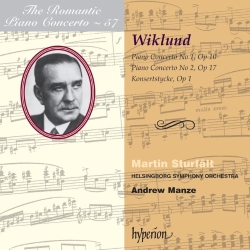
Role:Composer ConductorCountry: SwedenBirth:June 5, 1879 in Langserud, VarmlandDeath:April 3, 1950 in Stockholm, SwedenPeriod:ModernGenre:ConcertoKeyboardOrchestralAdolf Wiklund was a Swedish composer and pianist who lived from 1879 to 1950. He was born in Stockholm, Sweden, and showed an early interest in music. His father was a music teacher, and Wiklund began taking piano lessons at a young age. He also showed an aptitude for composition, and began writing his own music as a teenager. Wiklund studied at the Royal College of Music in Stockholm, where he was a student of the composer and pianist Ernst Ellberg. He also studied with the composer and conductor Tor Aulin. During his time at the college, Wiklund developed a reputation as a talented pianist and composer. He won several awards for his compositions, including the Jenny Lind scholarship, which allowed him to study in Paris. In Paris, Wiklund studied with the composer and pianist Isidor Philipp. He also attended concerts and operas, and was exposed to the music of Debussy, Ravel, and other French composers. This experience had a profound influence on Wiklund's music, and he began to incorporate elements of French impressionism into his compositions. Wiklund returned to Sweden in 1905, and began a career as a composer and pianist. He wrote music in a variety of genres, including orchestral works, chamber music, and solo piano pieces. His music was well-received by audiences and critics, and he became known as one of Sweden's leading composers. One of Wiklund's most famous works is his Piano Concerto No. 1, which he composed in 1908. The concerto is a virtuosic showcase for the soloist, with fast runs and intricate passagework. It also features lush, romantic melodies and rich harmonies. The concerto was premiered by the Swedish pianist Hilda Thegerström, and was an immediate success. It has since become one of Wiklund's most popular works, and is still performed regularly today. Wiklund also wrote several other works for piano and orchestra, including his Piano Concerto No. 2, which he composed in 1929. This concerto is more introspective than his first, with a more subdued and lyrical character. It also features a prominent role for the woodwinds, which add a pastoral quality to the music. In addition to his piano concertos, Wiklund wrote several other orchestral works, including his Symphony No. 1, which he composed in 1916. The symphony is a large-scale work in four movements, and features lush harmonies and sweeping melodies. It also shows the influence of French impressionism, with its use of colorful orchestration and impressionistic harmonies. Wiklund also wrote several chamber music works, including his String Quartet No. 1, which he composed in 1912. The quartet is a lyrical and expressive work, with rich harmonies and intricate counterpoint. It also features a prominent role for the cello, which often takes the lead in the music. Throughout his career, Wiklund remained committed to the ideals of Swedish national music. He was a member of the Society of Swedish Composers, and was a strong advocate for the promotion of Swedish music both at home and abroad. He also taught composition at the Royal College of Music in Stockholm, where he influenced a generation of young Swedish composers. Wiklund's music fell out of favor after his death in 1950, but has recently experienced a resurgence of interest. His music is now being rediscovered by a new generation of musicians and audiences, who appreciate its lush harmonies, expressive melodies, and colorful orchestration.More....
Recent Artist Music
4
18:39
Copyright Ⓒ 2013 Davinci Finger. All rights reseved
Service Terms & Policy