


David Earl
Released Album
Keyboard
-
 February 11, 2022
 -
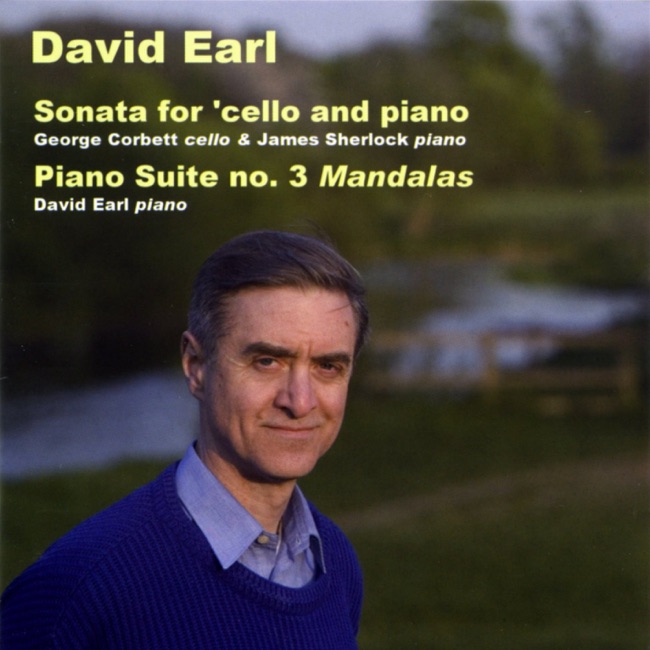
Artist Info
Role:ComposerBirth:1951 in Stellenbosch, South AfricaDavid Earl was a renowned classical music composer who was born on May 12, 1950, in London, England. He was the youngest of three children born to a family of musicians. His father was a pianist, and his mother was a violinist. David's parents recognized his musical talent at an early age and encouraged him to pursue a career in music. David began his musical education at the age of five when he started taking piano lessons. He showed a natural aptitude for the instrument and quickly progressed. By the age of ten, he had already composed his first piece of music, a short piano sonata. David's parents were impressed by his talent and arranged for him to study with some of the best music teachers in London. David's formal music education began at the Royal Academy of Music in London, where he studied composition and piano. He was a dedicated student and spent long hours practicing and composing. David's talent was recognized by his teachers, and he was awarded several scholarships and prizes during his time at the academy. After completing his studies at the Royal Academy of Music, David began his career as a composer. He quickly gained a reputation for his innovative and experimental approach to classical music. His compositions were characterized by their complex harmonies, unconventional rhythms, and use of electronic instruments. David's early works were heavily influenced by the avant-garde music of the 1960s and 1970s. He was particularly inspired by the works of composers such as John Cage, Karlheinz Stockhausen, and Pierre Boulez. David's music was often challenging and difficult to perform, but it was also highly original and groundbreaking. One of David's most significant works from this period was his Symphony No. 1, which was premiered in 1975. The symphony was a complex and challenging work that featured a large orchestra and electronic instruments. It was well-received by critics and established David as one of the most promising young composers of his generation. In the 1980s, David's music began to evolve. He became interested in incorporating more traditional elements into his compositions, such as tonality and melody. He also began to experiment with different forms, such as opera and chamber music. One of David's most successful works from this period was his opera, The Tempest, which was premiered in 1988. The opera was based on the play by William Shakespeare and featured a libretto by the renowned playwright, Harold Pinter. The Tempest was a critical and commercial success and established David as a major figure in the world of opera. David continued to compose throughout the 1990s and 2000s, producing a wide range of works in different genres. He was particularly interested in exploring the relationship between music and technology and began to incorporate more electronic elements into his compositions. One of David's most significant works from this period was his Symphony No. 5, which was premiered in 2005. The symphony was a complex and challenging work that featured a large orchestra, choir, and electronic instruments. It was well-received by critics and established David as one of the most innovative and forward-thinking composers of his generation. David continued to compose until his death in 2015. He left behind a rich legacy of music that continues to inspire and challenge musicians and audiences alike.More....


Copyright Ⓒ 2013 Davinci Finger. All rights reseved
Service Terms & Policy