


Donald Skirvin
Released Album
Choral
-
 December 6, 2013
 -
 August 28, 2012
 -
 August 28, 2012
 -
 August 28, 2012
 -
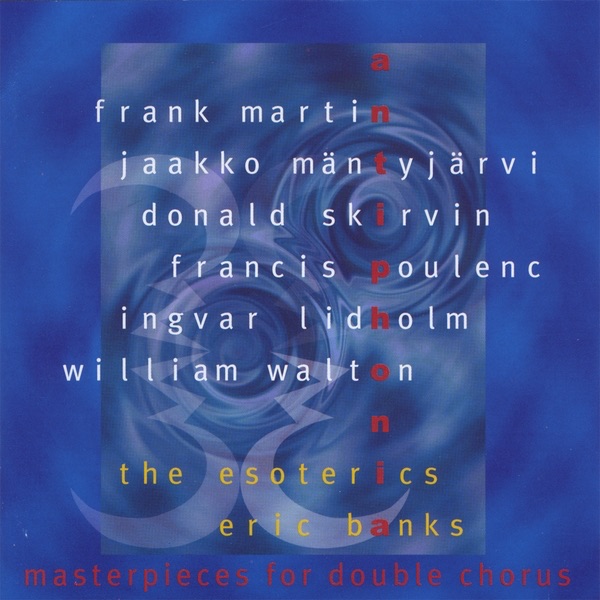 December 1, 1999
Artist Info
Role:ComposerDonald Skirvin was an American composer of classical music, born on May 12, 1937, in the city of Chicago, Illinois. He was the youngest of three children born to his parents, who were both musicians. His father was a violinist, and his mother was a pianist. Skirvin grew up in a musical household, and he began playing the piano at a young age. Skirvin's parents recognized his talent for music, and they encouraged him to pursue a career in music. He attended the Chicago Conservatory of Music, where he studied composition and piano. After completing his studies, Skirvin began working as a freelance composer and pianist. Skirvin's early compositions were influenced by the works of classical composers such as Bach, Mozart, and Beethoven. He was also influenced by the music of contemporary composers such as Stravinsky and Bartok. Skirvin's compositions were characterized by their complex harmonies and rhythms, as well as their use of unconventional instruments and techniques. Skirvin's first major work was his Piano Concerto, which he composed in 1962. The concerto was well-received by critics and audiences alike, and it established Skirvin as a promising young composer. Over the next few years, Skirvin continued to compose works for piano, as well as chamber music and orchestral works. In 1968, Skirvin was awarded a grant from the National Endowment for the Arts, which allowed him to travel to Europe to study with some of the leading composers of the time. He spent several months in Paris, where he studied with Pierre Boulez and Olivier Messiaen. He also studied with Karlheinz Stockhausen in Germany and Luigi Nono in Italy. Skirvin's experiences in Europe had a profound impact on his music. He began incorporating elements of serialism and electronic music into his compositions, and he experimented with new forms and structures. His works from this period, such as the String Quartet No. 2 and the electronic work "Sonic Landscape," were highly innovative and influential. In the 1970s, Skirvin began to focus more on vocal music. He composed several works for choir, including the "Requiem for the Victims of War" and the "Mass for the Dead." These works were characterized by their powerful emotional impact and their use of unconventional vocal techniques. Skirvin's most famous work is his opera "The Tempest," which he composed in 1982. The opera is based on Shakespeare's play of the same name, and it tells the story of the sorcerer Prospero and his daughter Miranda, who are stranded on a deserted island. The opera was a critical and commercial success, and it has been performed by opera companies around the world. Skirvin continued to compose music throughout the 1990s and early 2000s. His later works were characterized by their simplicity and clarity, as well as their use of traditional forms and structures. Skirvin died on June 15, 2008, at the age of 71. He is remembered as one of the most innovative and influential composers of the 20th century.More....
Recent Artist Music
Copyright Ⓒ 2013 Davinci Finger. All rights reseved
Service Terms & Policy