


Ivar Widéen


Artist Info
Role:Composer PerformerGenre:ChoralVocalIvar Widéen was a Swedish composer and conductor who lived from 1871 to 1951. He was born in the town of Västerås, Sweden, on May 23, 1871, to a family of musicians. His father, Carl Widéen, was a well-known organist and composer, and his mother, Anna, was a singer. Ivar Widéen showed an early interest in music and began studying the piano and violin at a young age. Widéen's musical education continued at the Royal College of Music in Stockholm, where he studied composition with Johan Lindegren and piano with Richard Andersson. He also studied conducting with Tor Aulin and later with Arthur Nikisch in Berlin. Widéen's talent as a conductor was recognized early on, and he was appointed conductor of the Royal Opera in Stockholm in 1908. Widéen's career as a composer began in earnest in the early 1900s. His early works were influenced by the Romantic tradition, but he soon developed his own style, which was characterized by a strong sense of melody and a keen ear for orchestration. Widéen's music was often described as "lyrical" and "poetic," and he was known for his ability to create music that was both emotionally powerful and technically sophisticated. One of Widéen's most famous works is his Symphony No. 1 in C minor, which was premiered in Stockholm in 1907. The symphony is a large-scale work that showcases Widéen's skill as an orchestrator and his ability to create powerful musical themes. The symphony was well-received by audiences and critics alike, and it helped establish Widéen as one of Sweden's leading composers. Widéen's output as a composer was varied and included works for orchestra, chamber ensembles, and solo instruments. He also wrote several operas, including "The Enchanted Island" and "The King's Ring," which were both successful in Sweden and other parts of Europe. In addition to his work as a composer, Widéen was also a respected conductor. He served as the conductor of the Royal Opera in Stockholm from 1908 to 1914 and later conducted the Gothenburg Symphony Orchestra from 1919 to 1926. Widéen was known for his ability to bring out the best in his musicians and for his attention to detail in rehearsals. Widéen's career as a composer and conductor was interrupted by World War II, during which he was forced to flee Sweden and live in exile in Switzerland. Despite the difficulties he faced during this time, Widéen continued to compose and conduct, and he remained active in the musical community until his death in 1951. Today, Widéen is remembered as one of Sweden's most important composers of the early 20th century. His music continues to be performed and recorded, and his influence can be heard in the work of many contemporary Swedish composers. Widéen's legacy as a composer and conductor is a testament to his talent and dedication to the art of music.More....
Recent Artist Music
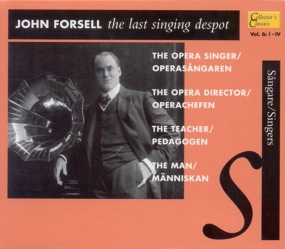


Copyright Ⓒ 2013 Davinci Finger. All rights reseved
Service Terms & Policy