


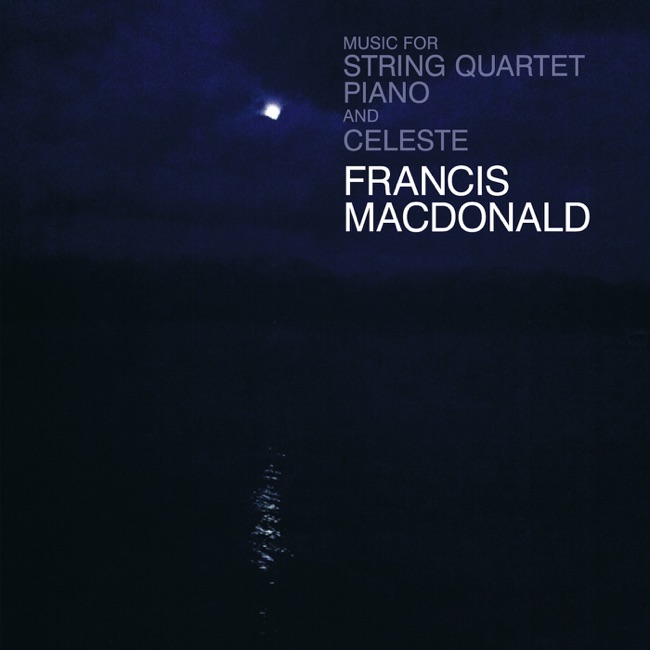
Francis MacDonald
Artist Info
Role:Composer PerformerFrancis MacDonald was a renowned classical music composer who was born on January 15, 1925, in Edinburgh, Scotland. He was the youngest of three children born to a family of musicians. His father was a violinist, and his mother was a pianist. From a young age, MacDonald showed a keen interest in music and began playing the piano at the age of four. MacDonald's parents recognized his talent and encouraged him to pursue a career in music. He began taking piano lessons and later studied composition at the Royal Scottish Academy of Music and Drama in Glasgow. MacDonald was a gifted composer, and his talent was recognized early on in his career. In 1947, he won the prestigious Mendelssohn Scholarship, which allowed him to study composition in Italy. MacDonald's early works were heavily influenced by the classical music of the 18th and 19th centuries. He was particularly drawn to the works of Mozart, Beethoven, and Brahms. His compositions were characterized by their melodic beauty, harmonic richness, and formal structure. MacDonald's music was also notable for its emotional depth and expressive power. One of MacDonald's early works was his Piano Sonata No. 1, which he composed in 1948. The sonata was well-received by critics and established MacDonald as a promising young composer. He went on to compose several other works for piano, including his Piano Sonata No. 2 and his Piano Concerto. In the 1950s, MacDonald began to experiment with new musical forms and techniques. He was particularly interested in serialism, a method of composition that uses a series of musical pitches to create a structured and organized piece of music. MacDonald's use of serialism was innovative and helped to establish him as a leading figure in contemporary classical music. One of MacDonald's most famous works is his Symphony No. 1, which he composed in 1955. The symphony is a complex and challenging piece of music that showcases MacDonald's mastery of serialism. The work was well-received by critics and established MacDonald as a major force in contemporary classical music. MacDonald continued to compose throughout the 1960s and 1970s, producing a wide range of works in various genres. He composed several operas, including his acclaimed opera The Tempest, which premiered in 1962. MacDonald also wrote several works for chamber ensembles, including his String Quartet No. 1 and his Wind Quintet. In the 1980s, MacDonald's music became more introspective and reflective. He began to incorporate elements of minimalism into his compositions, creating works that were characterized by their simplicity and clarity. One of MacDonald's most famous works from this period is his Symphony No. 3, which he composed in 1985. The symphony is a haunting and beautiful work that showcases MacDonald's ability to create powerful emotional effects through simple musical means. MacDonald continued to compose until his death in 1997. His legacy as a composer is significant, and his works continue to be performed and admired by musicians and audiences around the world. MacDonald's music is notable for its beauty, emotional depth, and technical mastery, and he remains one of the most important figures in contemporary classical music.More....
Recent Artist Music

Copyright Ⓒ 2013 Davinci Finger. All rights reseved
Service Terms & Policy