


August Kühnel
Released Album
Chamber
-
 May 31, 2019
 -
 August 22, 2018
 -
 September 4, 2015
 -
 March 10, 2015
 -
-
 September 21, 2012
Artist Info
Role:ComposerCountry: GermanyBirth:August 3, 1645Death:1700Period:BaroqueGenre:ChamberKeyboardAugust Kühnel was a German composer and musician who lived during the Baroque period. He was born in 1645 in the town of Halle, which was then part of the Holy Roman Empire. Kühnel was the son of a musician, and he grew up in a family that was deeply involved in music. His father was a member of the town band, and Kühnel himself began playing the violin at a young age. Kühnel's musical talent was evident from an early age, and he quickly became known as a skilled musician. He began composing music while still a teenager, and his early works were well-received by his peers. Kühnel's father recognized his son's talent and encouraged him to pursue a career in music. In 1663, Kühnel moved to Dresden, where he became a member of the court orchestra. He quickly established himself as a talented musician, and he was soon appointed as the court's concertmaster. Kühnel's time in Dresden was a period of great growth for him as a musician and composer. He was exposed to a wide range of musical styles and techniques, and he began to develop his own unique style. Kühnel's compositions from this period were characterized by their complexity and sophistication. He was particularly skilled at writing for the violin, and his works for the instrument were highly regarded. Kühnel's music was also notable for its use of counterpoint and its intricate harmonies. In 1670, Kühnel left Dresden and moved to Leipzig, where he became the director of music at the Thomaskirche. This was a prestigious position, and it gave Kühnel the opportunity to work with some of the most talented musicians of his time. Kühnel's time in Leipzig was marked by a period of intense creativity, and he composed some of his most famous works during this time. One of Kühnel's most famous works is his Sonata in D Major for Violin and Continuo. This piece is notable for its use of complex harmonies and its intricate counterpoint. It is also notable for its use of the violin, which is featured prominently throughout the piece. The Sonata in D Major is considered to be one of Kühnel's most important works, and it has been performed by musicians all over the world. Another of Kühnel's famous works is his Suite in A Minor for Harpsichord. This piece is notable for its use of the harpsichord, which was a popular instrument during the Baroque period. The Suite in A Minor is characterized by its intricate melodies and its use of complex rhythms. It is considered to be one of Kühnel's most important works for the harpsichord. Kühnel's time in Leipzig was also marked by his work as a teacher. He was known for his ability to teach complex musical concepts in a way that was easy to understand, and he was highly respected by his students. Many of Kühnel's students went on to become successful musicians and composers in their own right. In 1682, Kühnel left Leipzig and moved to Hamburg, where he became the director of music at the Johanneum. This was another prestigious position, and it gave Kühnel the opportunity to work with some of the most talented musicians of his time. Kühnel's time in Hamburg was marked by a period of intense creativity, and he composed some of his most famous works during this time. One of Kühnel's most famous works from his time in Hamburg is his Sonata in G Major for Violin and Continuo. This piece is notable for its use of complex harmonies and its intricate counterpoint.More....
Recent Artist Music
2
9:22
6
1:30
9
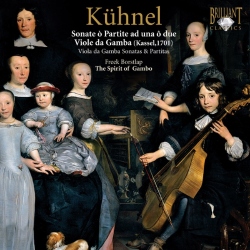
2:21

11
11:9
12
1:56
13
4:16
14
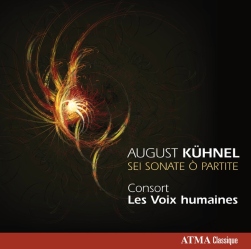
Sonata for 2 viola da gamba & continuo No. 1
Sonata I in F major: [Prélude] (Adagio - Allegro) - Allegro - Adagio - Aria - [Adagio] - Allegro
8:52
15
9:19
Copyright Ⓒ 2013 Davinci Finger. All rights reseved
Service Terms & Policy