


Andrew Rudin
Released Album
Chamber
-
 June 5, 2020
 -
 October 25, 2011
Keyboard
Concerto
-
 May 31, 2011
 -
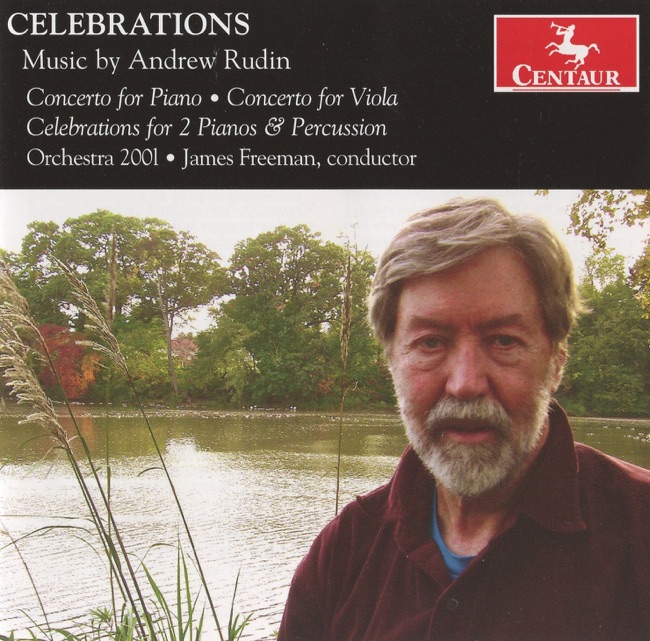 May 1, 2011
Electronic/Computer
-
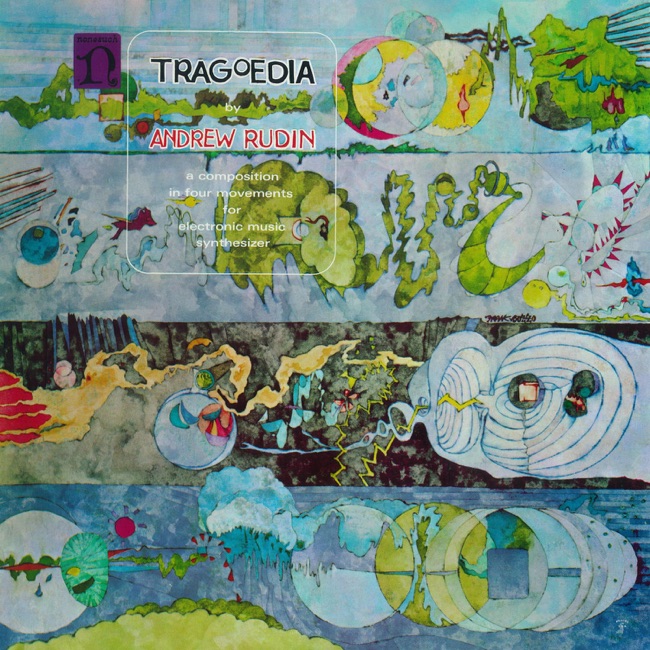 October 5, 2010
Artist Info
Role:ComposerAndrew Rudin is an American composer of classical music who was born on November 22, 1939, in Philadelphia, Pennsylvania. He grew up in a musical family, with his father being a violinist and his mother a pianist. Rudin began playing the piano at a young age and later learned to play the violin and viola. He attended the Philadelphia Musical Academy, where he studied composition with Vincent Persichetti and conducting with Anton Coppola. Rudin's early compositions were influenced by the serialism of Arnold Schoenberg and the Second Viennese School. He also drew inspiration from the music of Igor Stravinsky and Bela Bartok. In 1962, Rudin won the George Gershwin Memorial Award for his composition "Variations for Orchestra." This early success helped establish Rudin as a promising young composer. Throughout the 1960s and 1970s, Rudin continued to compose music that was characterized by its complexity and experimentation. He often used unconventional techniques, such as aleatoric music (music that is partially or wholly left to chance) and extended techniques (using instruments in non-traditional ways). Some of his notable works from this period include "Concerto for Viola and Orchestra" (1965), "String Quartet No. 1" (1967), and "Symphony No. 1" (1970). In the 1980s, Rudin's music began to shift towards a more tonal and accessible style. He began incorporating elements of jazz and popular music into his compositions, while still maintaining his signature complexity and experimentation. Some of his notable works from this period include "Concerto for Piano and Orchestra" (1982), "String Quartet No. 2" (1984), and "Symphony No. 2" (1987). Rudin's music has been performed by many notable orchestras and ensembles, including the Philadelphia Orchestra, the New York Philharmonic, and the Chicago Symphony Orchestra. He has also been commissioned to write music for a variety of occasions, including the bicentennial celebration of the United States Constitution and the opening of the Kimmel Center for the Performing Arts in Philadelphia. In addition to his work as a composer, Rudin has also been a dedicated educator. He has taught at a number of institutions, including the University of Pennsylvania, the Curtis Institute of Music, and the Manhattan School of Music. He has also served as a guest lecturer and conductor at universities and music festivals around the world. Rudin's contributions to the world of classical music have been recognized with numerous awards and honors. In 1995, he was awarded the Goddard Lieberson Fellowship from the American Academy of Arts and Letters. He has also been a recipient of the National Endowment for the Arts Composer's Fellowship and the Pennsylvania Council on the Arts Fellowship. Overall, Andrew Rudin's career as a composer has been characterized by his willingness to experiment and push the boundaries of traditional classical music. His early works were marked by their complexity and serialism, while his later works incorporated elements of jazz and popular music. Throughout his career, Rudin has remained dedicated to his craft and has continued to inspire and challenge audiences with his music.More....
Recent Artist Music
Copyright Ⓒ 2013 Davinci Finger. All rights reseved
Service Terms & Policy