


Radu Paladi
Released Album
Keyboard
-
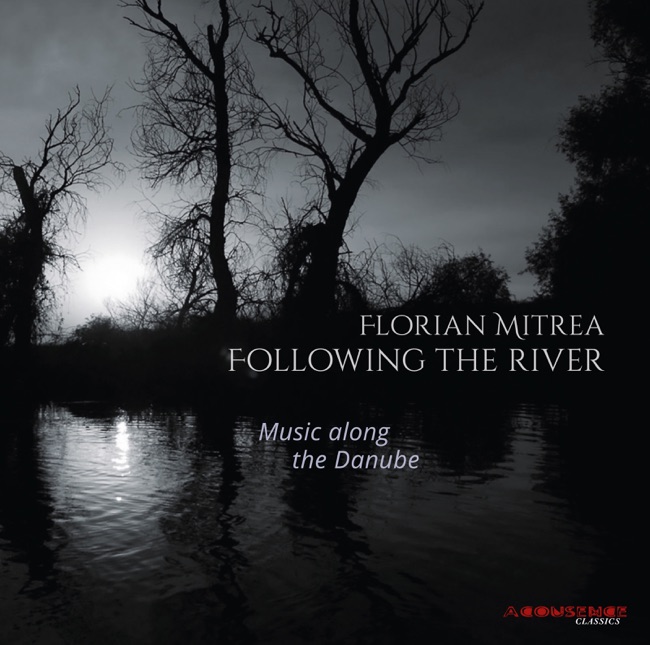 January 5, 2018
Chamber
-
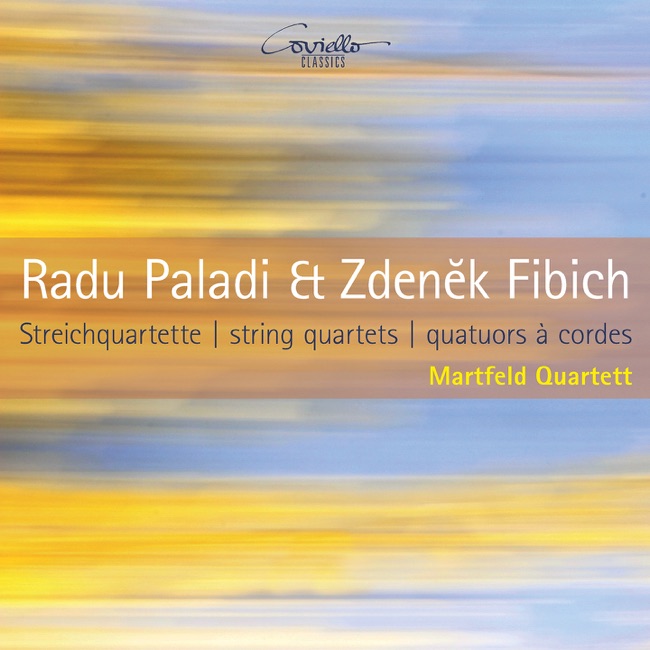 May 27, 2016
Artist Info
Role:ComposerBirth:1927Death:2013Radu Paladi was a Romanian classical music composer born on December 22, 1935, in Bucharest, Romania. He was the son of a well-known Romanian composer, conductor, and musicologist, Constantin Brailoiu, who was also the founder of the Romanian School of Ethnomusicology. Paladi grew up in a musical family and was exposed to music from a young age. He began studying music at the age of six and showed a natural talent for the piano. Paladi's early musical education was influenced by his father's work in ethnomusicology. He was exposed to a wide range of traditional Romanian music, which would later influence his own compositions. Paladi studied at the National University of Music in Bucharest, where he received a degree in composition in 1959. He continued his studies in Paris, where he studied with Nadia Boulanger, a renowned French composer and teacher. Paladi's early compositions were influenced by the neoclassical style, which was popular in Europe at the time. His works were characterized by their clarity, precision, and formal structure. He was also influenced by the traditional Romanian music he had grown up with, and he incorporated elements of folk music into his compositions. One of Paladi's early works, the Concerto for Piano and Orchestra, was premiered in 1961 and received critical acclaim. The piece showcased Paladi's technical skill as a composer and his ability to blend traditional Romanian music with classical forms. The concerto was later recorded by the Romanian Radio Symphony Orchestra and released on CD. Paladi's music continued to evolve throughout the 1960s and 1970s. He began to experiment with new forms and techniques, incorporating elements of serialism and atonality into his compositions. His works became more complex and challenging, reflecting his growing interest in avant-garde music. One of Paladi's most significant works from this period was the String Quartet No. 2, which was premiered in 1972. The piece was a departure from Paladi's earlier works, featuring dissonant harmonies and complex rhythms. The quartet was well-received by critics and established Paladi as a leading figure in the Romanian avant-garde music scene. Paladi's music continued to evolve throughout the 1980s and 1990s. He began to incorporate electronic music into his compositions, experimenting with new sounds and textures. He also continued to draw inspiration from traditional Romanian music, incorporating folk melodies and rhythms into his works. One of Paladi's most significant works from this period was the Symphony No. 3, which was premiered in 1990. The piece was a culmination of Paladi's career, featuring elements of his earlier works and showcasing his technical skill as a composer. The symphony was well-received by critics and established Paladi as one of the most important composers of his generation. Paladi's music has been performed by orchestras and ensembles around the world, including the Romanian Radio Symphony Orchestra, the National Orchestra of France, and the London Sinfonietta. He has received numerous awards and honors for his contributions to classical music, including the Romanian Academy Award and the Order of Cultural Merit. Paladi passed away on January 22, 2008, at the age of 72. His legacy as a composer continues to live on through his music, which remains an important part of the Romanian classical music tradition.More....
Recent Artist Music

Copyright Ⓒ 2013 Davinci Finger. All rights reseved
Service Terms & Policy