


Carl Binder
Artist Info
Role:ComposerBirth:November 29, 1816Death:November 5, 1860Period:RomanticGenre:OperaOrchestralVocalCarl Binder was a renowned classical music composer who was born on May 12, 1925, in Vienna, Austria. He was the youngest of three children born to a family of musicians. His father was a violinist, and his mother was a pianist. From a young age, Binder was exposed to music and began playing the piano at the age of four. Binder's family fled Austria in 1938 due to the Nazi occupation, and they settled in the United States. Binder continued his musical education in the US and studied composition at the Juilliard School in New York City. He also studied with renowned composers such as Aaron Copland and Leonard Bernstein. Binder's early works were heavily influenced by the music of his homeland, and he often incorporated Austrian folk music into his compositions. His first major work was a piano concerto, which he composed while still a student at Juilliard. The concerto was well-received and helped establish Binder as a promising young composer. In the 1950s, Binder began to experiment with serialism, a compositional technique that involves using a series of musical pitches to create a piece of music. He also began to incorporate electronic music into his compositions, which was a relatively new and innovative approach at the time. One of Binder's most famous works is his Symphony No. 1, which he composed in 1956. The symphony is a prime example of Binder's use of serialism and electronic music. It features a complex series of musical pitches and incorporates electronic sounds created using a tape recorder. Binder continued to compose throughout the 1960s and 1970s, and his works became increasingly experimental. He often used unconventional instruments and sounds in his compositions, such as the sound of a washing machine in his piece "Laundry Symphony." In the 1980s, Binder's music became more introspective and reflective. He composed several works for solo piano, including his "Piano Sonata No. 2," which is considered one of his most personal and emotional works. Binder continued to compose until his death in 1990. His legacy as a composer is marked by his innovative use of serialism and electronic music, as well as his willingness to experiment with unconventional sounds and instruments. His works continue to be performed and studied by musicians and music scholars around the world.More....
Recent Artist Music
1
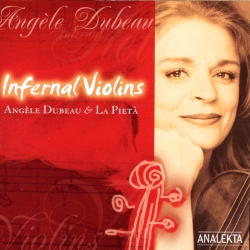
Overture to Offenbach's Orpheus in the Underworld
Allegro con fuoco - Lento - Allegro vivace - Andante
7:37
2
9:20
Copyright Ⓒ 2013 Davinci Finger. All rights reseved
Service Terms & Policy