


Zikmund Schul
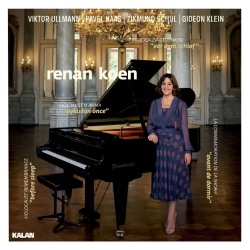
Released Album
Vocal
-
-
 June 9, 2009
Artist Info
Role:ComposerBirth:January 11, 1916 in Chemniitz/KasselDeath:June 20, 1944 in TheresienstadtZikmund Schul was a Czech composer and conductor who lived from 1916 to 1944. He was born in the town of Kolin, which is located in the central region of Bohemia. Schul showed an early interest in music and began studying piano and composition at a young age. He later attended the Prague Conservatory, where he studied under the renowned composer Alois Haba. Schul's early works were heavily influenced by Haba's microtonal system, which involved dividing the octave into more than the traditional twelve notes. Schul's use of microtones can be heard in his early compositions, such as his String Quartet No. 1, which was written in 1937. In addition to his studies at the Prague Conservatory, Schul also studied conducting with Vaclav Talich, who was the conductor of the Czech Philharmonic Orchestra. Schul's interest in conducting led him to become the conductor of the Kolin Symphony Orchestra, which was based in his hometown. Schul's career as a composer and conductor was cut short by the outbreak of World War II. In 1942, he was deported to the Terezin concentration camp, where he continued to compose music despite the harsh conditions. Schul's most famous work, his Symphony No. 2, was written while he was in Terezin. The symphony was premiered in the camp in 1944, just months before Schul's death. Schul's Symphony No. 2 is a powerful work that reflects the composer's experiences in the concentration camp. The symphony is divided into three movements, each of which has a different character. The first movement is somber and mournful, while the second movement is more upbeat and hopeful. The final movement is a powerful statement of defiance, with the orchestra building to a climactic finish. Schul's other works include several chamber music pieces, such as his String Quartet No. 2 and his Piano Trio. These works also show Schul's use of microtones and his interest in exploring new harmonic possibilities. Despite his short career, Schul's music has had a lasting impact on the Czech classical music scene. His use of microtones and his willingness to experiment with new harmonic structures have influenced many composers who came after him. Schul's Symphony No. 2 is still performed today, and is considered one of the most important works of Czech classical music from the 20th century.More....
Recent Artist Music
Copyright Ⓒ 2013 Davinci Finger. All rights reseved
Service Terms & Policy