


David Wynne
Released Album
Artist Info
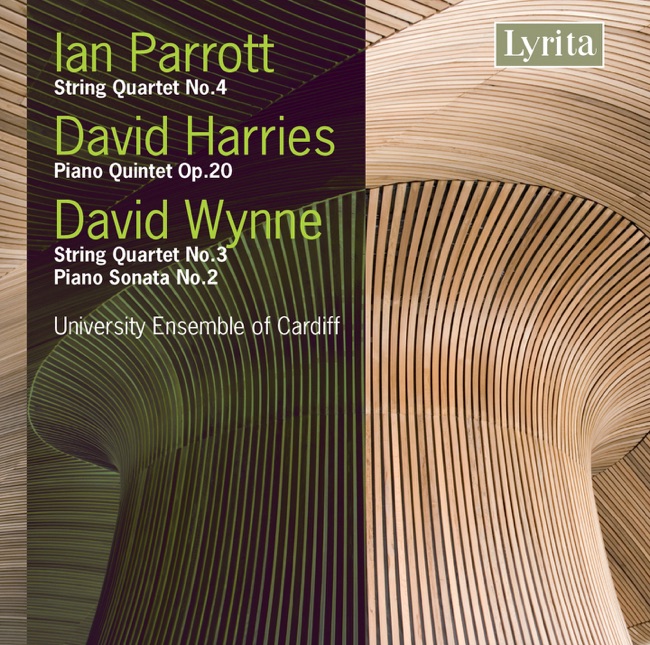
Role:ComposerBirth:1900 in Penderyn, WalesDeath:1983 in Pencoed, WalesGenre:ChamberDavid Wynne was a British classical music composer who was born on May 5, 1926, in Liverpool, England. He was the son of a Welsh father and an English mother. Wynne's father was a musician who played the violin and the piano, and he encouraged his son to pursue a career in music. Wynne began his musical education at the age of six when he started taking piano lessons. He showed a natural talent for music and quickly progressed. At the age of 11, he started composing his own music, and by the time he was a teenager, he had already written several pieces for piano and chamber ensembles. In 1944, Wynne was conscripted into the British Army and served in the Royal Artillery during World War II. After the war, he returned to his musical studies and enrolled at the Royal Academy of Music in London. He studied composition with William Alwyn and piano with Harold Craxton. Wynne's early compositions were influenced by the music of the Romantic era, particularly the works of Chopin and Schumann. However, he soon developed his own style, which was characterized by a lyrical and expressive melody, rich harmonies, and a sophisticated use of counterpoint. One of Wynne's early successes was his Piano Sonata No. 1, which he composed in 1950. The piece was well-received by critics and established Wynne as a promising young composer. He went on to write several other works for piano, including a set of variations on a theme by Bach and a suite of dances. In the 1950s, Wynne began to explore other genres, including chamber music and orchestral works. One of his most notable works from this period was his String Quartet No. 1, which he composed in 1955. The piece was premiered at the Wigmore Hall in London and received critical acclaim. Wynne's music continued to evolve throughout the 1960s and 1970s. He became interested in electronic music and started experimenting with synthesizers and other electronic instruments. He also began to incorporate elements of jazz and rock music into his compositions. One of Wynne's most ambitious works was his Symphony No. 1, which he composed in 1978. The piece was a large-scale work for orchestra and choir and was inspired by the poetry of William Blake. The symphony was premiered at the Royal Festival Hall in London and was well-received by both critics and audiences. Wynne continued to compose music well into his later years. In 1996, he wrote his Piano Sonata No. 2, which was premiered at the Wigmore Hall in London. The piece was hailed as a masterpiece and demonstrated Wynne's continued growth as a composer. Throughout his career, Wynne received numerous awards and honors for his contributions to classical music. He was awarded the CBE (Commander of the Order of the British Empire) in 1985 and was made a Fellow of the Royal Academy of Music in 1991. David Wynne passed away on September 25, 2014, at the age of 88. He left behind a legacy of beautiful and innovative music that continues to inspire and delight audiences around the world.More....
Recent Artist Music
Copyright Ⓒ 2013 Davinci Finger. All rights reseved
Service Terms & Policy