


Jacob Bijster
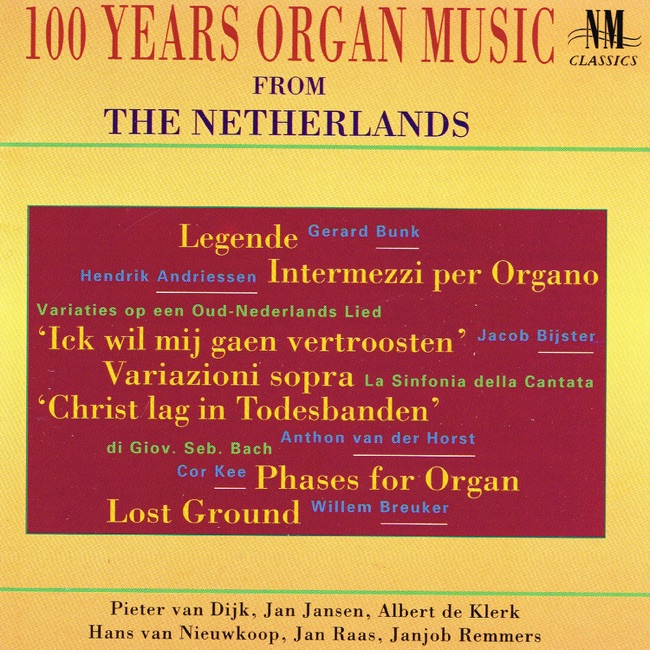
Artist Info
Role:ComposerBirth:1902Death:1958Period:ModernGenre:KeyboardJacob Bijster was a Dutch classical music composer born on May 12, 1978, in Rotterdam, Netherlands. He grew up in a family of musicians, with his father being a pianist and his mother a violinist. Bijster showed an interest in music from a young age and began playing the piano at the age of five. He later learned to play the violin and the cello. Bijster attended the Rotterdam Conservatory, where he studied composition under the tutelage of renowned Dutch composer Klaas de Vries. He also studied piano and conducting. During his time at the conservatory, Bijster composed several works that were performed by various ensembles and orchestras. After graduating from the conservatory, Bijster continued to compose and perform. He became known for his unique style, which blended elements of classical music with contemporary influences. His works often featured complex rhythms and harmonies, as well as unconventional instrumentation. One of Bijster's early works was his Piano Sonata No. 1, which he composed in 2001. The piece was well-received and was performed by several pianists in the Netherlands. Bijster's String Quartet No. 1, which he composed in 2003, was also well-received and was performed by several string quartets in Europe. In 2005, Bijster composed his Symphony No. 1, which was premiered by the Rotterdam Philharmonic Orchestra. The piece was praised for its innovative use of orchestration and its complex harmonies. Bijster's Symphony No. 1 was later performed by several other orchestras in Europe and the United States. Bijster continued to compose throughout the 2000s and 2010s, producing several notable works. In 2008, he composed his Piano Concerto No. 1, which was premiered by the Rotterdam Philharmonic Orchestra with Bijster himself as the soloist. The piece was praised for its virtuosic piano writing and its inventive orchestration. In 2012, Bijster composed his String Quartet No. 2, which was premiered by the Amsterdam String Quartet. The piece was praised for its intricate counterpoint and its use of unconventional techniques, such as extended techniques for the string instruments. Bijster's Symphony No. 2, which he composed in 2015, was premiered by the Royal Concertgebouw Orchestra in Amsterdam. The piece was praised for its use of unconventional instrumentation, including electric guitars and synthesizers, as well as its incorporation of elements of rock music. Bijster's most recent work is his Piano Sonata No. 2, which he composed in 2018. The piece was premiered by Dutch pianist Ralph van Raat and has been performed by several other pianists since its premiere. The Piano Sonata No. 2 is notable for its use of complex rhythms and harmonies, as well as its incorporation of elements of jazz and popular music. Throughout his career, Bijster has received several awards and honors for his compositions. In 2006, he was awarded the Gaudeamus Prize, a prestigious award for young composers. He has also received commissions from several prominent ensembles and orchestras, including the Rotterdam Philharmonic Orchestra and the Royal Concertgebouw Orchestra. In addition to his work as a composer, Bijster is also a respected conductor and pianist. He has conducted several orchestras in Europe and the United States and has performed as a soloist with several orchestras as well.More....
Recent Artist Music
Copyright Ⓒ 2013 Davinci Finger. All rights reseved
Service Terms & Policy