


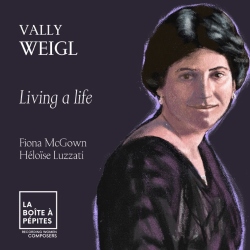
Vally Weigl
Released Album
Vocal
-
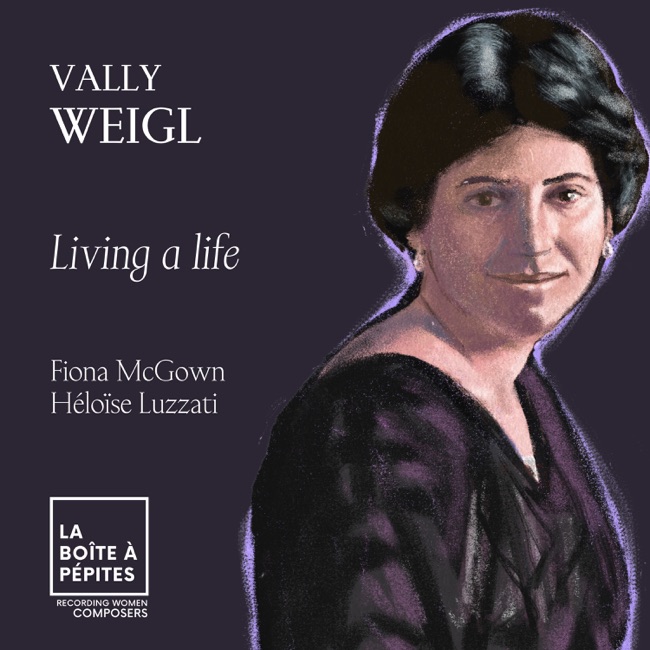
-
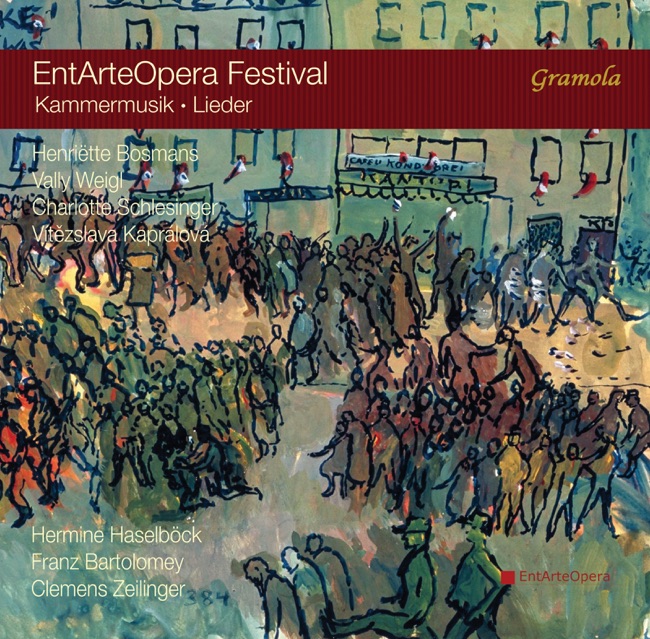 February 1, 2019
Chamber
-
 January 28, 2022
Artist Info
Role:ComposerBirth:September 11, 1894 in Vienna, AustriaDeath:December 25, 1982 in New York City, NYPeriod:ModernGenre:ChamberVocalVally Weigl was a classical music composer born on September 22, 1894, in Vienna, Austria. She was the daughter of a prominent physician, Dr. Julius Weigl, who was also a composer and conductor. Her mother, Marie Weigl, was a singer and pianist. Vally grew up in a musical household and began playing the piano at a young age. She showed a natural talent for music and began composing her own pieces as a teenager. In 1913, Vally enrolled at the Vienna Conservatory to study composition with Franz Schreker. She also studied piano with Richard Robert and music theory with Arnold Schoenberg. Schoenberg was a major influence on Vally's music, and she became one of his most devoted students. She was drawn to his innovative approach to composition, which emphasized atonality and the use of dissonance. During World War I, Vally worked as a nurse in a military hospital. She continued to compose during this time, and her music began to gain recognition. In 1918, she won the prestigious Beethoven Prize for her String Quartet No. 1. This was a major accomplishment for a young composer, and it helped to establish her reputation in the music world. After the war, Vally continued to compose and perform. She became involved in the Viennese avant-garde scene, which was a group of artists and musicians who were pushing the boundaries of traditional art forms. She collaborated with other artists, including the painter Oskar Kokoschka and the writer Franz Werfel. In 1926, Vally married the writer and journalist Max Brod. They moved to Prague, where Max worked as an editor and Vally continued to compose. She wrote music for the theater, including several operas and ballets. Her music was performed in Prague, Vienna, and other European cities. In 1939, Vally and Max fled Europe to escape the Nazi regime. They settled in New York City, where Vally continued to compose and teach. She became involved in the American music scene and was a member of the American Society of Composers, Authors, and Publishers (ASCAP). Vally's music continued to evolve during her time in America. She began to incorporate more tonal elements into her compositions, while still maintaining her unique style. She wrote music for a variety of ensembles, including orchestras, chamber groups, and solo instruments. One of Vally's most famous works is her String Quartet No. 2, which she composed in 1944. This piece is a tribute to her father, who had died in a concentration camp during the war. The quartet is a powerful and emotional work, with themes of loss and remembrance. Vally continued to compose and teach until her death in 1982. She was a pioneering composer who helped to shape the course of 20th-century music. Her music was innovative and daring, and it continues to be performed and studied today.More....
Recent Artist Music
Copyright Ⓒ 2013 Davinci Finger. All rights reseved
Service Terms & Policy