


Donald Martino
Released Album
Chamber
-
 February 16, 2024
 -
 October 28, 2014
 -
 June 26, 2012
 -
 January 10, 2012
 -
 July 15, 2010
 -
 February 26, 2010
Keyboard
-
 December 1, 2003
 -
-
 November 20, 1995
 -
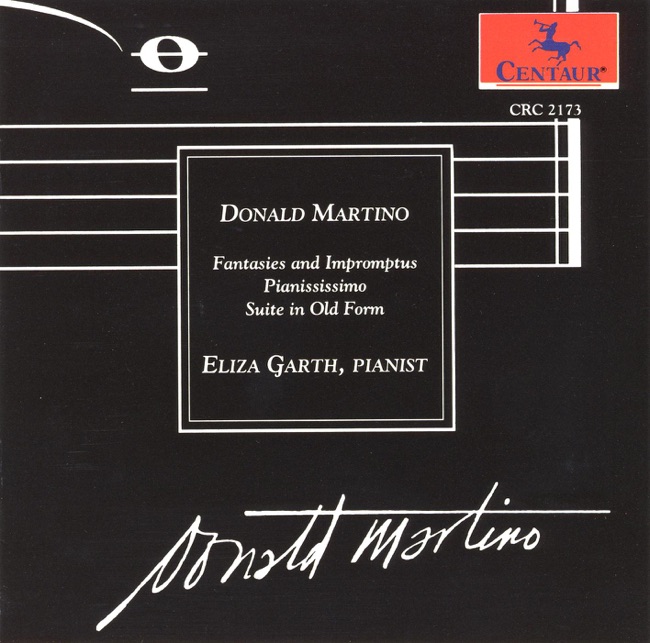 February 1, 1993
Artist Info
Role:ComposerBirth:May 16, 1931 in Plainfield, NJDeath:December 8, 2005 in Antigua, West IndiesPeriod:ContemporaryGenre:ChamberKeyboardDonald Martino was an American composer of classical music who was born on May 16, 1931, in Plainfield, New Jersey. He was the son of Italian immigrants and grew up in a musical family. His father was a violinist and his mother was a pianist, and they both encouraged their son's interest in music from an early age. Martino began his formal music education at the age of 12 when he started taking piano lessons. He later studied composition at Syracuse University, where he earned his Bachelor of Music degree in 1952. He then went on to study at the New England Conservatory of Music in Boston, where he earned his Master of Music degree in 1954. Martino's early compositions were influenced by the serialism movement, which was popular in the mid-20th century. Serialism is a compositional technique that uses a series of musical pitches, rhythms, or other elements to create a piece of music. Martino's early works, such as his String Quartet No. 1 (1954), were characterized by their use of serialism and their complex, dissonant harmonies. In the 1960s, Martino began to experiment with new compositional techniques, such as aleatoric music and indeterminacy. Aleatoric music is music that is partially or wholly left to chance, while indeterminacy is music that is open to interpretation by the performer. Martino's use of these techniques can be heard in works such as his Notturno (1963) for piano and his String Quartet No. 2 (1965). Martino's most famous work is his Pulitzer Prize-winning opera, The Ghosts of Versailles (1991). The opera is a sequel to Mozart's The Marriage of Figaro and features a libretto by William M. Hoffman. The Ghosts of Versailles is notable for its use of both traditional and modern compositional techniques, as well as its incorporation of elements of popular music. Martino's other notable works include his Concerto for Alto Saxophone and Orchestra (1977), his Piano Concerto No. 1 (1985), and his A Set for Clarinet (1983). He also wrote several works for chamber ensembles, including his Trio for Violin, Cello, and Piano (1985) and his Sonata for Flute and Piano (1987). Throughout his career, Martino was recognized for his contributions to the field of classical music. He received numerous awards and honors, including the Pulitzer Prize for Music in 1985 for his String Quartet No. 5. He was also a member of the American Academy of Arts and Letters and the American Academy of Arts and Sciences. Martino passed away on December 8, 2005, at the age of 74. His legacy as a composer of classical music continues to be celebrated and studied by musicians and music lovers around the world.More....
Recent Artist Music
2
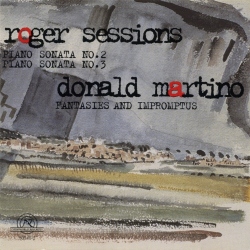
Fantasies and Impromptus
I. Fantasy: Maestoso Andante cantabile - Sempre ansioso - Maestoso giubilante - Cadenza and Coda
5:35

8
29:21
9
3:22
Copyright Ⓒ 2013 Davinci Finger. All rights reseved
Service Terms & Policy