


George Caspar Wecker
Released Album
Keyboard
-
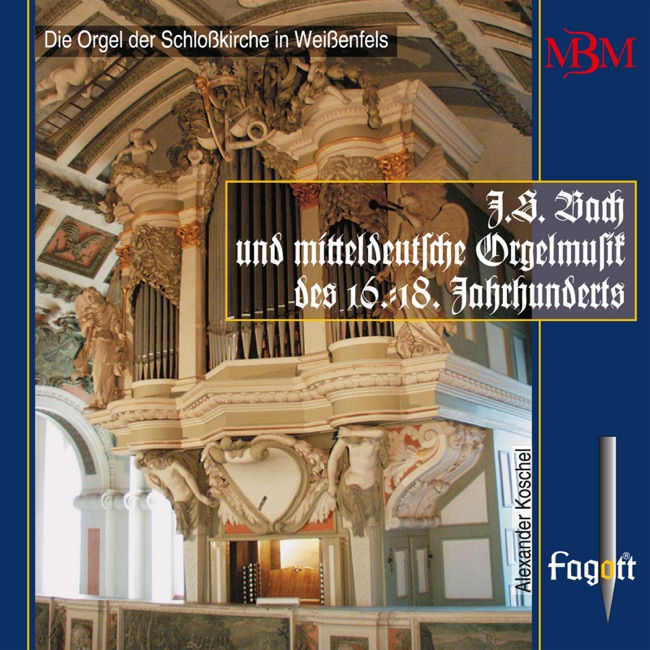 December 11, 2007
Artist Info
Role:ComposerBirth:1632Death:1695George Caspar Wecker was a German composer and organist who lived from 1716 to 1774. He was born in the town of Baden-Baden, which was then part of the Margraviate of Baden. Wecker was the son of a musician, and he began his musical education at a young age. He studied with his father and with other local musicians, and he showed great talent as a keyboard player and composer. Wecker's early career was focused on the organ. He served as the organist at the Stiftskirche in Baden-Baden from 1735 to 1741, and then at the St. Stephan's Church in Karlsruhe from 1741 to 1748. During this time, he also composed a number of works for the organ, including preludes, fugues, and chorale settings. These works show the influence of the Baroque style, with their intricate counterpoint and use of ornamentation. In 1748, Wecker moved to Mannheim, where he became the court organist for the Elector Palatine. He held this position until his death in 1774. During his time in Mannheim, Wecker composed a number of works for the court, including operas, cantatas, and instrumental music. He also continued to compose for the organ, and his works from this period show a greater interest in the emerging Classical style. One of Wecker's most famous works is his opera "L'Amoroso Imeneo," which was first performed in Mannheim in 1756. The opera tells the story of a young man who is torn between his love for two women. The music is characterized by its lyrical melodies and expressive harmonies, and it shows Wecker's skill as a composer of vocal music. Wecker also composed a number of instrumental works during his time in Mannheim. One of his most famous pieces is his Symphony in D major, which was composed in the 1760s. The symphony is notable for its use of the Mannheim crescendo, a technique in which the music gradually gets louder and more intense. This technique was widely used by composers in Mannheim at the time, and it had a significant influence on the development of the Classical style. In addition to his work as a composer, Wecker was also a respected teacher and music theorist. He wrote a number of treatises on music theory and composition, including "Grundregeln der Musikalischen Komposition" (Fundamental Rules of Musical Composition), which was published in 1757. This treatise was widely read and influential, and it helped to establish Wecker as an important figure in the world of music theory. Wecker's music was highly regarded during his lifetime, and he was recognized as one of the leading composers of his time. His works were performed throughout Germany and beyond, and he was admired for his skill as a composer and his contributions to the development of the Classical style. Today, Wecker's music is less well-known than that of some of his contemporaries, but it remains an important part of the history of classical music.More....
Recent Artist Music
Copyright Ⓒ 2013 Davinci Finger. All rights reseved
Service Terms & Policy