


Miroslav Srnka
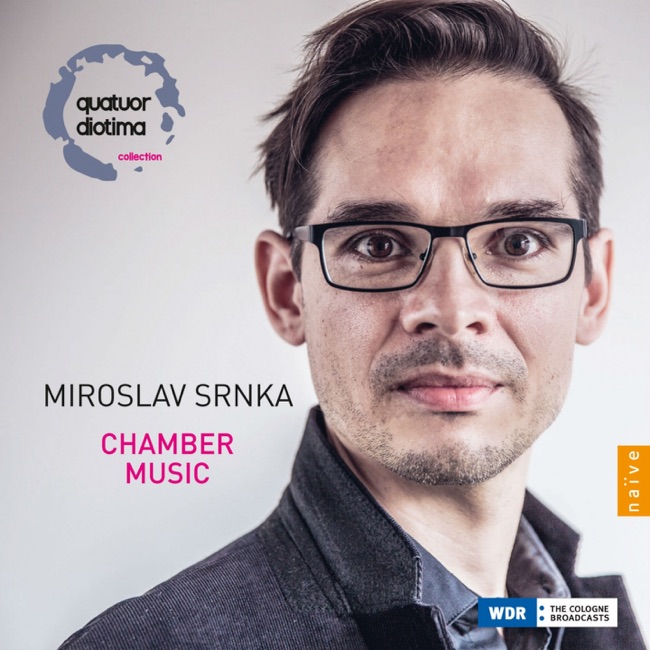

Artist Info
Role:ComposerMiroslav Srnka is a Czech composer who was born on October 28, 1975, in Prague. He grew up in a family of musicians, with his father being a composer and his mother a pianist. This musical environment had a significant impact on Srnka's early life, and he began playing the piano at a young age. Srnka studied composition at the Prague Conservatory and later at the Academy of Performing Arts in Prague. He also spent time studying in Germany, where he attended the Hochschule für Musik und Theater in Munich. During his studies, Srnka was influenced by the works of contemporary composers such as György Ligeti and Helmut Lachenmann. Srnka's early works were characterized by a focus on sound and texture, with a particular interest in exploring the possibilities of electronic music. His first major composition, "Piano Sonata No. 1," was written in 1997 and showcased his interest in using unconventional techniques to create new sounds. In the years that followed, Srnka continued to experiment with different musical styles and techniques. He composed a number of works for chamber ensembles, including "String Quartet No. 1" and "Wind Quintet No. 1." These pieces demonstrated Srnka's ability to create complex, multi-layered textures using a variety of instruments. Srnka's breakthrough came in 2004 with the premiere of his opera "Make No Noise." The work, which was commissioned by the Bavarian State Opera in Munich, was a critical and commercial success. It was praised for its innovative use of technology, which allowed the singers to interact with pre-recorded sounds and images. Following the success of "Make No Noise," Srnka continued to compose operas, including "South Pole" (2007) and "Wall" (2013). These works were characterized by their use of multimedia elements, including video projections and electronic music. In addition to his operas, Srnka has composed a number of orchestral works, including "Double Concerto for Violin and Cello" (2009) and "Engine" (2011). These pieces showcase Srnka's ability to create complex, dynamic textures using a large ensemble. Srnka's music has been performed by some of the world's leading orchestras and ensembles, including the Berlin Philharmonic, the London Symphony Orchestra, and the Ensemble Modern. He has also been the recipient of numerous awards and honors, including the Ernst von Siemens Music Prize in 2018. In recent years, Srnka has continued to push the boundaries of contemporary classical music. His works have become increasingly experimental, incorporating elements of improvisation and chance into his compositions. Despite this experimentation, Srnka's music remains accessible and engaging, appealing to both traditional classical music audiences and fans of contemporary music. Overall, Miroslav Srnka is a composer who has made significant contributions to the world of contemporary classical music. His innovative use of technology and multimedia elements has helped to redefine the boundaries of opera and orchestral music, while his focus on sound and texture has created a unique and distinctive musical language. With his continued experimentation and exploration, Srnka is sure to remain a major figure in the world of classical music for years to come.More....

Copyright Ⓒ 2013 Davinci Finger. All rights reseved
Service Terms & Policy