


Heinrich Schenker
Released Album
Keyboard
-
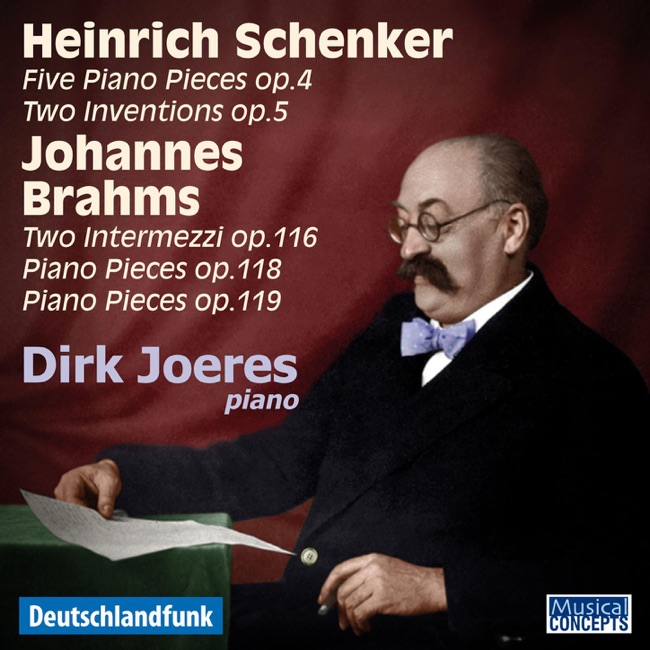 November 5, 2013
 -
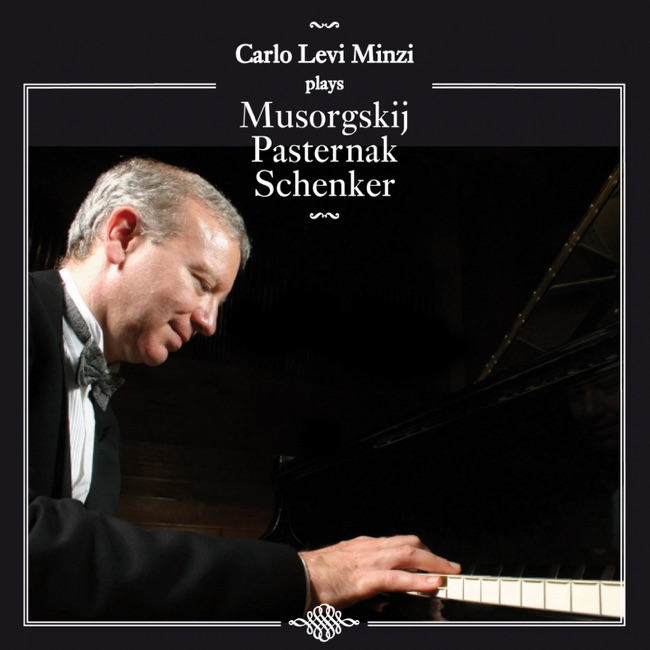 November 19, 2012
Artist Info
Role:ComposerBirth:1868Death:1935Heinrich Schenker was a prominent Austrian music theorist and composer who lived from 1868 to 1935. He is best known for his innovative approach to music analysis, which has had a significant impact on the field of music theory. Schenker was born in Wisniowczyk, Galicia, which was then part of the Austro-Hungarian Empire. His family was Jewish, and his father was a successful businessman. Schenker showed an early aptitude for music, and he began studying piano at a young age. He also showed an interest in composition, and he began writing his own music as a teenager. In 1884, Schenker moved to Vienna to study music at the Conservatory. He studied piano with Anton Door and composition with Robert Fuchs. He also began to develop his own theories about music, which were influenced by the work of Johann Sebastian Bach and other Baroque composers. After completing his studies, Schenker worked as a music teacher and composer. He wrote a number of works for piano, including sonatas, preludes, and fugues. He also wrote a number of songs and choral works. In the early 1900s, Schenker began to focus more on music theory. He developed a new approach to music analysis, which he called "Urlinie" (or "fundamental line"). This approach emphasized the underlying structure of a piece of music, and it sought to identify the essential elements that give a piece its coherence and unity. Schenker's approach to music analysis was highly influential, and it has had a lasting impact on the field of music theory. His ideas were particularly influential in the United States, where they were embraced by a number of prominent music theorists, including Felix Salzer and Ernst Oster. In addition to his work as a music theorist, Schenker continued to compose throughout his life. He wrote a number of works for piano, including his famous "Piano Sonata in F-sharp minor." He also wrote a number of songs and choral works. Schenker's music is characterized by its contrapuntal complexity and its adherence to traditional forms. His works often feature intricate counterpoint and elaborate harmonic progressions. He was particularly interested in the music of Bach and other Baroque composers, and his music reflects this influence. Despite his significant contributions to the field of music theory, Schenker's work was not widely recognized during his lifetime. He struggled to find a publisher for his major theoretical works, and he was often dismissed by his contemporaries as a crank. It was not until after his death that Schenker's work began to receive the recognition it deserved. In the years following his death, a number of prominent music theorists began to embrace his ideas, and his approach to music analysis became widely taught in universities and conservatories around the world. Today, Schenker is widely regarded as one of the most important music theorists of the 20th century. His innovative approach to music analysis has had a lasting impact on the field, and his ideas continue to be studied and debated by music theorists and composers around the world.More....
Recent Artist Music
Copyright Ⓒ 2013 Davinci Finger. All rights reseved
Service Terms & Policy