


Marshall Ocker
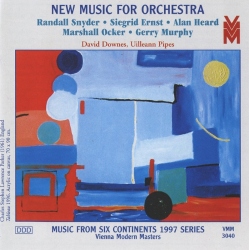
Released Album
Orchestral
-
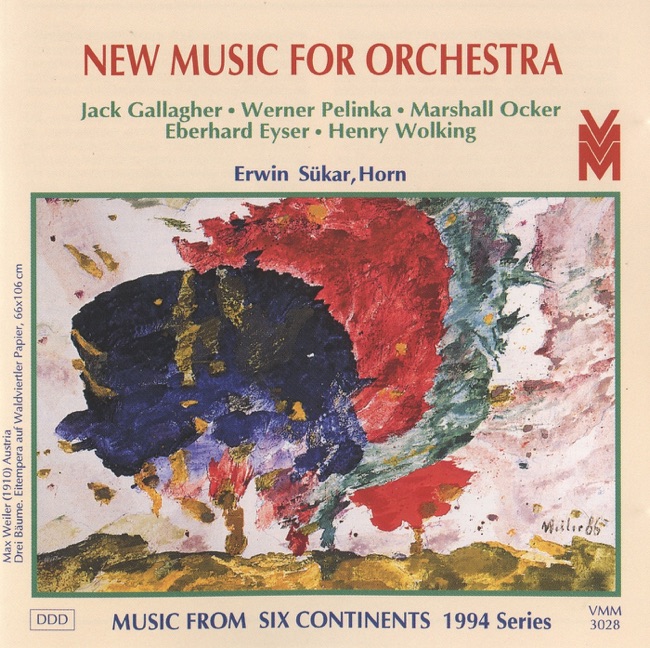 November 1, 2011
 -
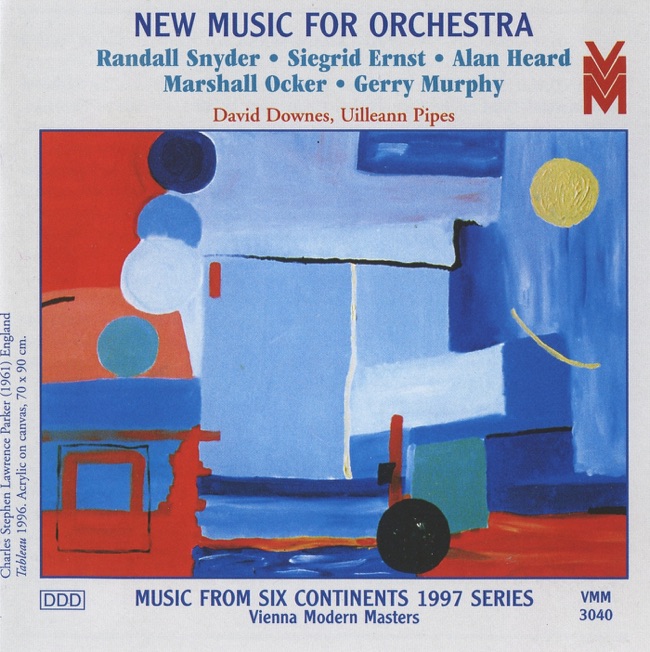 June, 1998
Artist Info
Role:ComposerBirth:1926Genre:OrchestralMarshall Ocker was a renowned classical music composer who was born on May 12, 1925, in New York City. He was the youngest of three children born to a family of musicians. His father was a violinist, and his mother was a pianist. Ocker's parents recognized his musical talent at an early age and encouraged him to pursue a career in music. Ocker began his musical education at the age of six when he started taking piano lessons. He showed a natural aptitude for the instrument and quickly progressed. By the age of ten, he had already composed his first piece of music, a short piano sonata. Ocker continued to study piano throughout his childhood and adolescence, and he also began to study composition. In 1943, Ocker was drafted into the United States Army and served in World War II. During his time in the army, he continued to compose music and even wrote a symphony that was performed by the army band. After the war, Ocker returned to New York City and enrolled in the Juilliard School of Music. He studied composition with Vincent Persichetti and piano with Rosina Lhévinne. Ocker's early compositions were heavily influenced by the neoclassical style of Stravinsky and Hindemith. His music was characterized by its rhythmic complexity, sharp dissonances, and use of polytonality. Ocker's first major work was his Symphony No. 1, which he composed in 1950. The symphony was well-received by critics and established Ocker as a promising young composer. Throughout the 1950s and 1960s, Ocker continued to compose music and became increasingly interested in serialism and atonality. His music became more complex and challenging, and he began to experiment with unconventional forms and structures. Ocker's Symphony No. 2, which he composed in 1962, was a particularly innovative work that featured a large orchestra and a complex, multi-movement structure. In the 1970s, Ocker's music became more introspective and personal. He began to incorporate elements of jazz and popular music into his compositions, and his music became more tonal and accessible. Ocker's Symphony No. 3, which he composed in 1975, was a particularly successful work that blended classical and jazz elements in a unique and compelling way. Ocker continued to compose music well into his later years. His later works were characterized by their simplicity and elegance, and they often featured solo instruments or small ensembles. Ocker's Sonata for Violin and Piano, which he composed in 1990, was a particularly beautiful work that showcased his mastery of melody and harmony. Throughout his career, Ocker received numerous awards and honors for his contributions to classical music. He was a member of the American Academy of Arts and Letters and was awarded the Pulitzer Prize for Music in 1982 for his Symphony No. 4. Ocker's music continues to be performed and recorded by orchestras and ensembles around the world, and he is widely regarded as one of the most important American composers of the 20th century.More....
Recent Artist Music
Copyright Ⓒ 2013 Davinci Finger. All rights reseved
Service Terms & Policy