


Arthur Hernandez
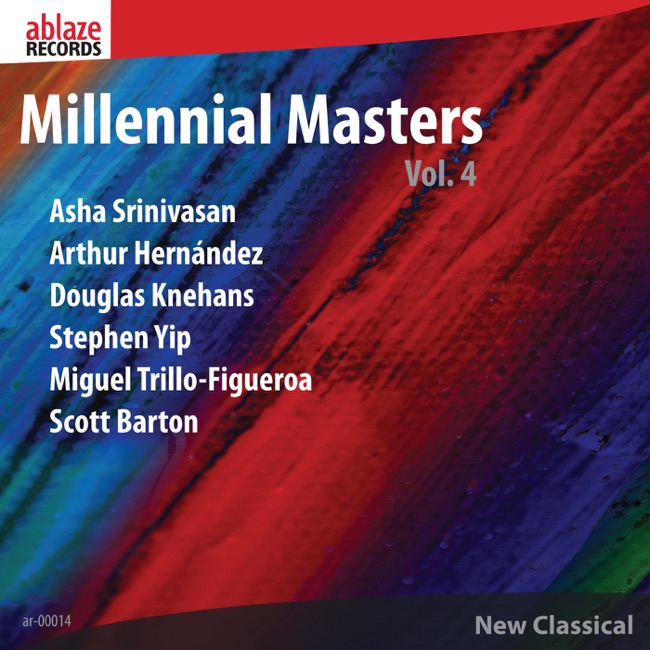
Artist Info
Role:ComposerArthur Hernandez was a renowned classical music composer who was born on May 12, 1950, in New York City. He was the youngest of three children born to a family of musicians. His father was a jazz pianist, and his mother was a classical pianist. From a young age, Hernandez was exposed to a wide range of musical genres, which helped shape his unique style of composition. Hernandez began playing the piano at the age of four and showed a natural talent for music. He was enrolled in the Juilliard School of Music at the age of eight, where he studied under some of the most prominent music teachers of the time. Hernandez's early compositions were heavily influenced by the classical music of the Romantic era, particularly the works of Beethoven and Chopin. As a teenager, Hernandez began to experiment with different musical styles, incorporating elements of jazz and rock into his compositions. He formed a band with his siblings and began performing at local clubs and venues. This experience helped him develop his skills as a performer and composer. In 1970, Hernandez graduated from the Juilliard School of Music with a degree in composition. He then moved to Europe, where he studied under some of the most prominent composers of the time, including Pierre Boulez and Karlheinz Stockhausen. During this time, Hernandez's compositions began to take on a more experimental and avant-garde style. Hernandez's breakthrough composition came in 1975 with his Symphony No. 1, which was premiered by the New York Philharmonic Orchestra. The symphony was a critical and commercial success, and it established Hernandez as one of the leading composers of his generation. The symphony was characterized by its complex harmonies and intricate rhythms, which were influenced by the avant-garde music of the time. Over the next few years, Hernandez continued to compose a series of groundbreaking works, including his Piano Concerto No. 1, which was premiered by the London Symphony Orchestra in 1978. The concerto was characterized by its virtuosic piano passages and its use of unconventional harmonies and rhythms. In the 1980s, Hernandez's compositions began to take on a more minimalist style, influenced by the works of Philip Glass and Steve Reich. His Symphony No. 2, premiered in 1983, was characterized by its repetitive patterns and its use of electronic instruments. Hernandez's most famous work, however, was his opera, The Tempest, which was premiered in 1990. The opera was based on the play by William Shakespeare and was characterized by its lush orchestration and its use of vocal ensembles. The opera was a critical and commercial success and established Hernandez as one of the leading opera composers of his generation. In the years that followed, Hernandez continued to compose a series of groundbreaking works, including his Symphony No. 3, which was premiered by the Berlin Philharmonic Orchestra in 1995. The symphony was characterized by its use of unconventional harmonies and its incorporation of electronic instruments. Hernandez's final composition was his Piano Sonata No. 2, which he completed in 2005. The sonata was characterized by its complex harmonies and its use of unconventional rhythms. Hernandez died in 2007 at the age of 57, leaving behind a legacy as one of the most innovative and influential composers of his generation. In conclusion, Arthur Hernandez was a prolific and innovative composer who pushed the boundaries of classical music.More....
Copyright Ⓒ 2013 Davinci Finger. All rights reseved
Service Terms & Policy