


Humphrey Procter-Gregg
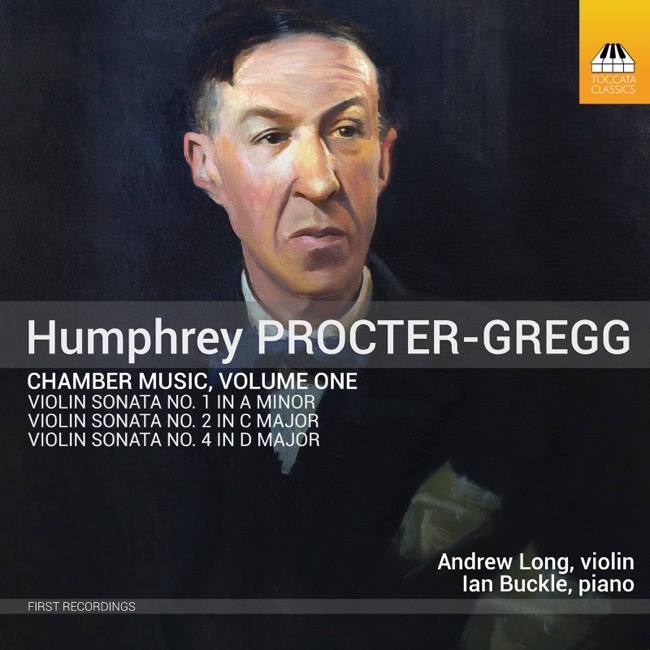
Artist Info
Role:ComposerPeriod:RomanticModernGenre:ChamberVocalHumphrey Procter-Gregg was a British composer and conductor who was born on 20th August 1895 in London, England. He was the son of a clergyman and was raised in a musical family. His father was a keen amateur musician, and his mother was a talented pianist. Procter-Gregg showed an early interest in music and began playing the piano at a young age. Procter-Gregg received his early education at St. Paul's School in London, where he excelled in music. He went on to study at the Royal College of Music, where he was a pupil of Charles Villiers Stanford. He also studied with Ralph Vaughan Williams and Gustav Holst, two of the most prominent British composers of the time. After completing his studies, Procter-Gregg began his career as a conductor and composer. He worked as an assistant conductor at the Royal Opera House in London and later became the conductor of the Bournemouth Municipal Orchestra. He also worked as a music critic for several newspapers, including The Times and The Observer. Procter-Gregg's compositions were influenced by his love of English folk music and his interest in the works of composers such as Vaughan Williams and Holst. His early works were often choral pieces, and he became known for his skill in writing for the voice. He also wrote several orchestral works, including a symphony and a suite for strings. One of Procter-Gregg's most famous works is his opera, "The Duenna," which was first performed in 1935. The opera is based on a play by Richard Brinsley Sheridan and tells the story of a young man who falls in love with a woman who is being forced to marry someone else. The opera was well-received by audiences and critics alike and helped to establish Procter-Gregg as a major figure in British music. Procter-Gregg continued to compose throughout his career, and his later works included several chamber music pieces and a concerto for piano and orchestra. He also wrote music for several films, including "The Four Feathers" and "The Thief of Bagdad." In addition to his work as a composer, Procter-Gregg was also a respected conductor. He conducted several orchestras throughout his career, including the London Symphony Orchestra and the BBC Symphony Orchestra. He was known for his ability to bring out the best in his musicians and for his attention to detail. Procter-Gregg was also a dedicated teacher and taught at several institutions, including the Royal College of Music and the Guildhall School of Music and Drama. He was known for his kindness and generosity towards his students and was highly respected by his colleagues. Procter-Gregg died on 24th December 1980 at the age of 85. He left behind a legacy of beautiful music and a reputation as one of the most important British composers of the 20th century. His works continue to be performed and recorded today, and his influence can be heard in the works of many contemporary composers.More....
Copyright Ⓒ 2013 Davinci Finger. All rights reseved
Service Terms & Policy