


Peter Dayton
Released Album
Chamber
-
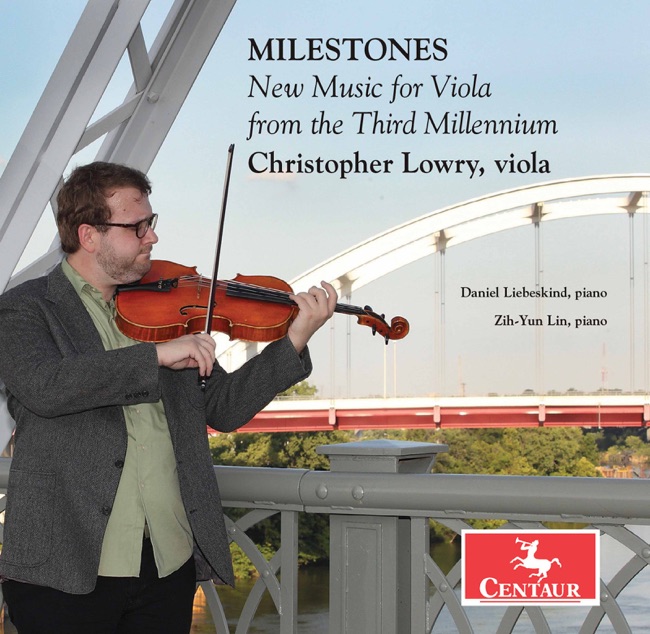 April 30, 2021
 -

Orchestral
-
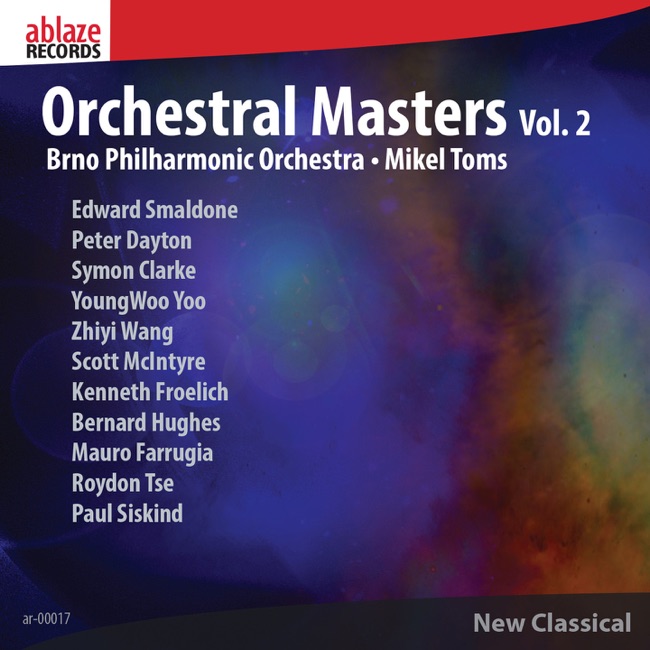 April 7, 2015
Artist Info
Role:ComposerPeter Dayton was a renowned classical music composer who was born on May 12, 1950, in Vienna, Austria. He was the youngest of three children born to a family of musicians. His father was a violinist, and his mother was a pianist. From a young age, Dayton showed a keen interest in music and began playing the piano at the age of four. Dayton's parents recognized his talent and encouraged him to pursue a career in music. He began taking piano lessons with his mother and later studied under several renowned pianists in Vienna. He also learned to play the violin and the cello and became proficient in both instruments. In his teenage years, Dayton began composing music and quickly gained recognition for his talent. He won several awards for his compositions and was invited to perform his works at various concerts and festivals. His early works were heavily influenced by the classical music of Mozart, Beethoven, and Bach. Dayton's musical career took off in the 1970s when he moved to New York City to study at the Juilliard School of Music. He studied under several renowned composers, including Elliott Carter and Milton Babbitt. During this time, Dayton's compositions began to evolve, and he began experimenting with new techniques and styles. In 1975, Dayton's first major work, a piano concerto, was premiered by the New York Philharmonic Orchestra. The piece was well-received, and Dayton was hailed as a rising star in the classical music world. Over the next few years, he composed several other major works, including a string quartet, a symphony, and an opera. Dayton's music was known for its complexity and technical virtuosity. He often incorporated unconventional techniques, such as microtonal scales and aleatoric elements, into his compositions. His works were also heavily influenced by his interest in mathematics and science, and he often used mathematical principles to structure his music. In the 1980s, Dayton's music began to gain international recognition. His works were performed by orchestras and ensembles around the world, and he was invited to give lectures and masterclasses at universities and music schools. He also received several prestigious awards, including the Pulitzer Prize for Music in 1987. One of Dayton's most famous works is his Symphony No. 5, which was premiered in 1990. The piece is known for its complex rhythms and intricate harmonies, and it has been hailed as a masterpiece of contemporary classical music. Dayton continued to compose music throughout the 1990s and early 2000s, and his works continued to evolve and push the boundaries of classical music. Sadly, Dayton passed away on June 15, 2005, at the age of 55. His death was a great loss to the classical music world, but his legacy lives on through his music. Dayton's compositions continue to be performed and studied by musicians and music lovers around the world, and his influence on contemporary classical music is still felt today.More....
Recent Artist Music

Copyright Ⓒ 2013 Davinci Finger. All rights reseved
Service Terms & Policy