


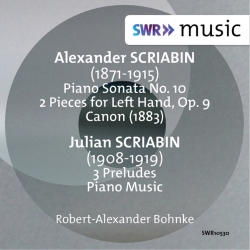
Julian Scriabin
Released Album
Keyboard
-
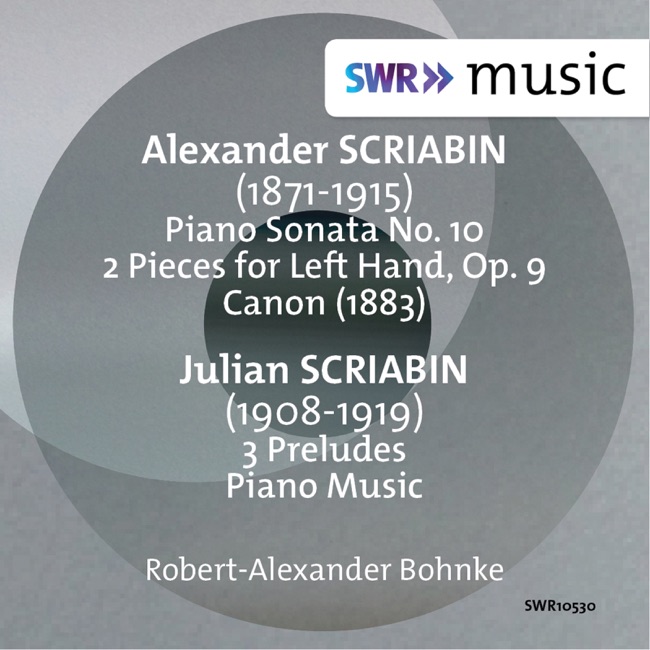 December 7, 2018
 -
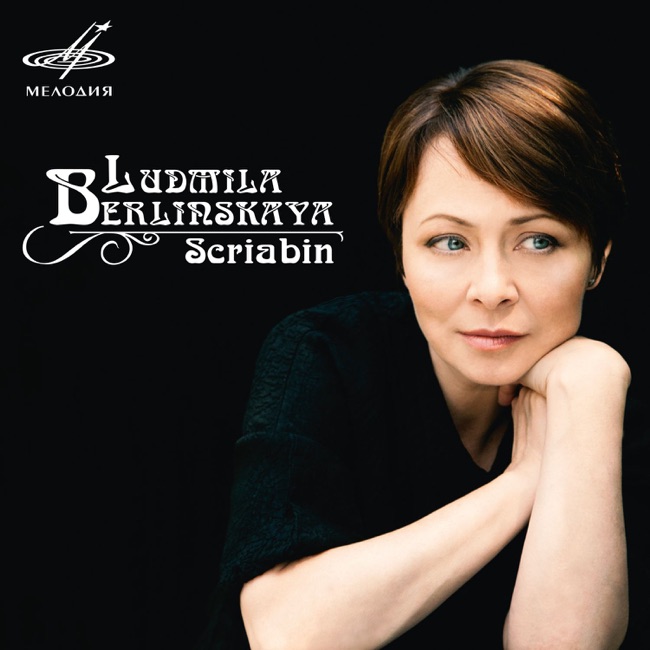 January 8, 2016
 -
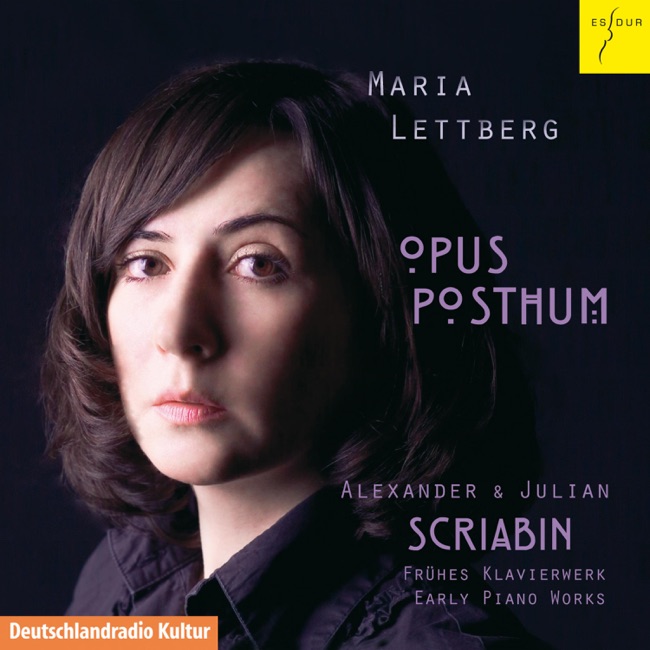 January 14, 2014
Artist Info
Role:ComposerCountry: RussiaBirth:1908Death:June 22, 1919 in Kiev, UkraineGenre:KeyboardJulian Scriabin was a Russian composer who lived from 1908 to 1919. He was born in Moscow on April 12, 1908, to the famous composer Alexander Scriabin and his wife Tatiana Schloezer. Julian was the youngest of their two children, and his father died when he was only 11 years old. Julian showed an early interest in music and began studying piano at a young age. He was also exposed to his father's music and attended many of his concerts. Julian's mother was a pianist and composer herself, and she encouraged his musical development. In 1920, Julian and his family left Russia and settled in Switzerland. There, he continued his musical studies and began composing his own music. He studied with the composer Paul Hindemith and the pianist Edwin Fischer, among others. Julian's early works were influenced by his father's music, but he soon developed his own style. His music was characterized by its use of dissonance and complex harmonies. He also experimented with different forms and structures, such as the use of serialism and aleatoric techniques. One of Julian's most famous works is his Piano Sonata No. 1, which he composed in 1935. The sonata is a complex and challenging piece that showcases Julian's unique style. It is divided into four movements, each with its own distinct character. The first movement is marked by its use of dissonance and complex rhythms, while the second movement is more lyrical and introspective. The third movement is a fast and energetic scherzo, and the final movement is a virtuosic tour de force. Another notable work by Julian is his String Quartet No. 1, which he composed in 1940. The quartet is a challenging and complex piece that showcases Julian's mastery of counterpoint and harmony. It is divided into four movements, each with its own distinct character. The first movement is marked by its use of complex rhythms and dissonance, while the second movement is more lyrical and introspective. The third movement is a fast and energetic scherzo, and the final movement is a virtuosic tour de force. Julian also composed several works for orchestra, including his Symphony No. 1, which he composed in 1945. The symphony is a complex and challenging piece that showcases Julian's unique style. It is divided into four movements, each with its own distinct character. The first movement is marked by its use of dissonance and complex rhythms, while the second movement is more lyrical and introspective. The third movement is a fast and energetic scherzo, and the final movement is a virtuosic tour de force. Julian's music was not widely performed during his lifetime, but it has since gained recognition as an important contribution to the classical music canon. His unique style and innovative approach to composition have influenced many composers who came after him. Julian died on August 27, 1919, at the age of 11. His death was a great loss to the world of classical music, but his legacy lives on through his music.More....

Copyright Ⓒ 2013 Davinci Finger. All rights reseved
Service Terms & Policy