


Johan Daniel Berlin
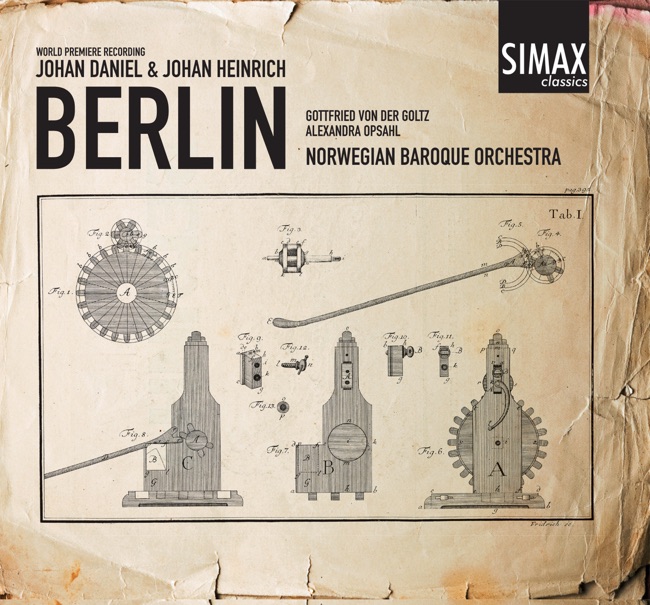
Artist Info
Role:ComposerBirth:May 12, 1714Death:November 4, 1787Johan Daniel Berlin was a German composer and musician who lived from 1714 to 1787. He was born in the town of Guben, which was then part of the Electorate of Saxony. Berlin's father was a musician, and he began teaching his son music at a young age. Berlin showed a natural talent for music, and he quickly became proficient on several instruments, including the violin, harpsichord, and organ. Berlin's family moved to Leipzig when he was a child, and he began studying music with Johann Sebastian Bach. Bach recognized Berlin's talent and took him on as a student. Berlin studied with Bach for several years, and he became one of Bach's most accomplished pupils. Bach's influence can be heard in Berlin's music, which is characterized by its contrapuntal complexity and its use of fugues and canons. After completing his studies with Bach, Berlin began working as a musician in Leipzig. He played in several orchestras and also worked as a music teacher. In 1740, he was appointed as the organist at the St. Thomas Church in Leipzig, a position that had previously been held by Bach. Berlin held this position for the rest of his life, and he became known as one of the most accomplished organists of his time. Berlin's music was highly regarded during his lifetime, and he was considered one of the leading composers of his generation. His works were performed throughout Germany and other parts of Europe, and he was praised for his skillful use of counterpoint and his ability to create complex and intricate musical structures. One of Berlin's most famous works is his "Organ Sonata in D Major," which was composed in 1755. This piece is characterized by its use of complex counterpoint and its intricate harmonies. It is considered one of the most important works in the organ repertoire, and it is still performed frequently today. Another notable work by Berlin is his "Concerto for Harpsichord and Strings in G Major," which was composed in 1760. This piece is notable for its use of the harpsichord as a solo instrument, and it is considered one of the most important works in the harpsichord repertoire. Berlin's music was also notable for its use of dance forms, such as the minuet and the gavotte. He was known for his skillful use of these forms, and his music was often praised for its elegance and grace. In addition to his work as a composer, Berlin was also a respected music theorist. He wrote several treatises on music theory, including "Anleitung zur Musik" (Instructions for Music), which was published in 1755. This treatise was highly influential, and it helped to establish Berlin as one of the leading music theorists of his time. Berlin's music was highly regarded during his lifetime, and it continued to be performed and studied after his death. His influence can be heard in the works of many later composers, including Mozart and Beethoven. Today, Berlin is remembered as one of the most important composers of the Baroque era, and his music continues to be performed and studied by musicians and music lovers around the world.More....
Recent Artist Music

Copyright Ⓒ 2013 Davinci Finger. All rights reseved
Service Terms & Policy