


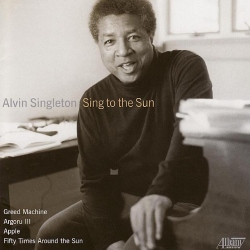
Alvin Elliot Singleton
Released Album
Keyboard
-
 November 19, 2013
 -
 March 7, 2000
Chamber
-
 September 23, 2022
 -
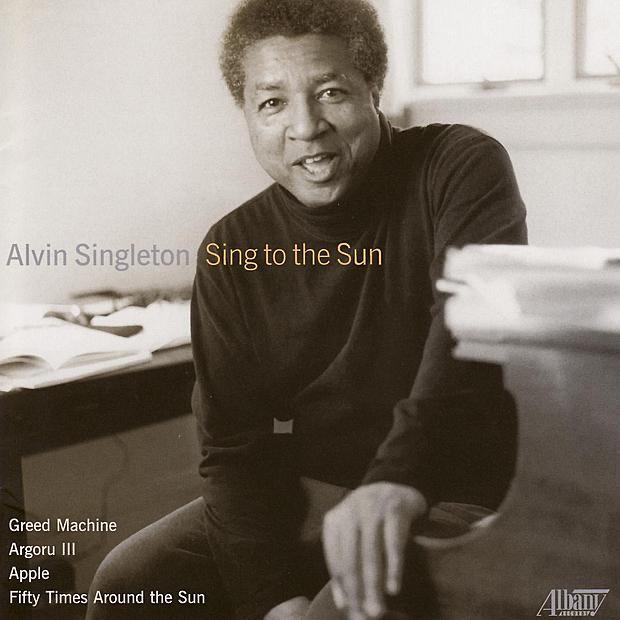 February 13, 2007
 -
 February 22, 2005
 -
 September 24, 2002
Orchestral
-
 June 21, 2005
Artist Info
Role:ComposerBirth:December 28, 1940Period:ContemporaryGenre:ChamberOrchestralVocalAlvin Elliot Singleton was an American composer of classical music, born on December 28, 1940, in Brooklyn, New York. He was the youngest of three children born to parents who were both educators. Singleton's father was a principal, and his mother was a teacher. Growing up, Singleton was exposed to music through his mother, who played the piano and sang in the church choir. Singleton began his formal music education at the age of 12 when he started taking piano lessons. He later studied at the High School of Music and Art in New York City, where he was introduced to the works of composers such as Igor Stravinsky and Arnold Schoenberg. After high school, Singleton attended New York University, where he earned a Bachelor of Music degree in 1963. After completing his undergraduate studies, Singleton moved to Europe to continue his music education. He studied composition with Luigi Nono in Venice, Italy, and with Goffredo Petrassi in Rome, Italy. Singleton also spent time in Paris, France, where he studied with Nadia Boulanger, a renowned composition teacher who had taught many famous composers, including Aaron Copland and Philip Glass. Singleton's early works were influenced by the avant-garde music of the 1960s, which was characterized by experimental techniques and unconventional sounds. His first major composition, "In My Own Skin," was written in 1968 and premiered at the New York Philharmonic's Young Composers' Forum. The piece was well-received and helped establish Singleton as a promising young composer. Throughout the 1970s, Singleton continued to compose music that was experimental and challenging. His works from this period include "Arctic Dreams," a piece for orchestra that was inspired by the landscape and culture of the Arctic, and "Shadows," a work for solo piano that explores the use of silence and space in music. In the 1980s, Singleton's music began to incorporate more traditional elements, such as tonality and melody. His works from this period include "BluesKonzert," a piece for piano and orchestra that combines elements of classical music and the blues, and "Somehow We Can," a work for orchestra that features a prominent role for the saxophone. Singleton's music continued to evolve throughout the 1990s and 2000s. His later works include "Different River," a piece for orchestra that was inspired by the Mississippi River, and "Again," a work for solo piano that explores the use of repetition and variation in music. Throughout his career, Singleton received numerous awards and honors for his contributions to classical music. He was a recipient of the Guggenheim Fellowship, the American Academy of Arts and Letters Award, and the Koussevitzky Music Foundation Commission. In 2014, he was awarded the Samuel Barber Rome Prize in Music Composition. Singleton passed away on October 12, 2021, at the age of 80. His legacy as a composer of innovative and challenging music will continue to inspire future generations of musicians and composers.More....
Recent Artist Music
7
1:55
Copyright Ⓒ 2013 Davinci Finger. All rights reseved
Service Terms & Policy