


Amos Elkana
Artist Info
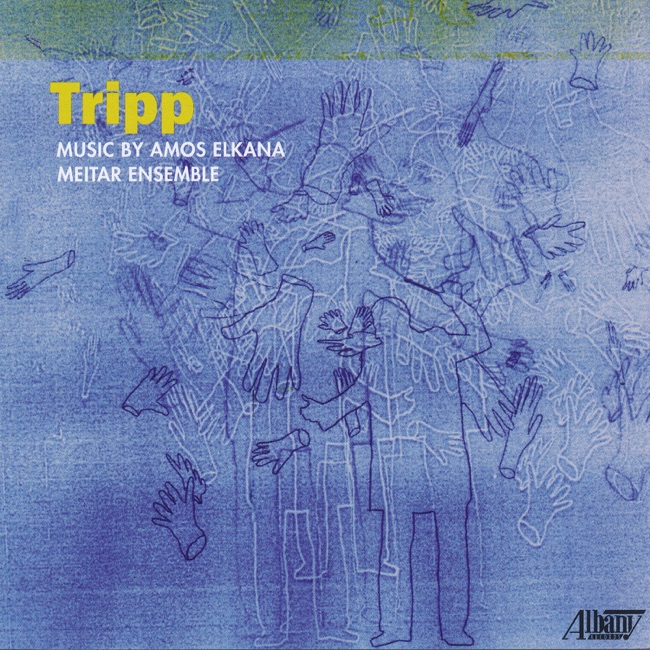
Role:ComposerBirth:1967Genre:OrchestralAmos Elkana was a classical music composer born on May 12, 1965, in Tel Aviv, Israel. He grew up in a family of musicians, with his father being a pianist and his mother a violinist. From a young age, Elkana showed a keen interest in music and began playing the piano at the age of five. He later learned to play the violin and the cello. Elkana's parents recognized his talent and encouraged him to pursue a career in music. He attended the Tel Aviv Music Academy, where he studied composition under the guidance of renowned composer, Yitzhak Sadai. Elkana's early works were heavily influenced by the classical music of the Romantic era, particularly the works of Beethoven and Brahms. In 1987, Elkana moved to New York City to further his studies in music. He enrolled at the Juilliard School of Music, where he studied composition with Milton Babbitt and Elliott Carter. During his time at Juilliard, Elkana was exposed to a wide range of musical styles, including contemporary classical music, jazz, and world music. Elkana's compositions began to reflect his diverse musical influences. His works became more experimental, incorporating elements of jazz and world music into his classical compositions. His music was characterized by complex harmonies, intricate rhythms, and a strong sense of melody. In 1992, Elkana's composition, "Concerto for Violin and Orchestra," was premiered by the New York Philharmonic. The piece was well-received by critics and established Elkana as a rising star in the classical music world. The concerto was later recorded by the London Symphony Orchestra and released on CD. Elkana continued to compose prolifically throughout the 1990s and early 2000s. His works were performed by orchestras and ensembles around the world, including the Berlin Philharmonic, the London Symphony Orchestra, and the New York Philharmonic. He also collaborated with a number of prominent musicians, including jazz pianist Chick Corea and world music artist Ravi Shankar. One of Elkana's most notable works is his "Symphony No. 1," which was premiered by the Berlin Philharmonic in 1998. The symphony is a complex and ambitious work, featuring a large orchestra and incorporating elements of jazz and world music. The piece was praised for its innovative use of orchestration and its ability to seamlessly blend different musical styles. Elkana's later works continued to push the boundaries of classical music. His "Concerto for Cello and Orchestra," premiered in 2005, featured a solo cello accompanied by a jazz trio. The piece was a departure from traditional classical concertos and showcased Elkana's ability to seamlessly blend different musical genres. Elkana's music was also notable for its political and social commentary. His "Requiem for the Victims of War," premiered in 2003, was a powerful and emotional work that addressed the human toll of war. The piece was dedicated to the victims of the Iraq War and was performed by the London Symphony Orchestra. Elkana's career was tragically cut short when he passed away in 2007 at the age of 42. Despite his relatively short career, Elkana left behind a rich legacy of innovative and groundbreaking classical music. His works continue to be performed and recorded by orchestras and ensembles around the world, and he remains an important figure in the world of contemporary classical music.More....
Recent Artist Music
Copyright Ⓒ 2013 Davinci Finger. All rights reseved
Service Terms & Policy