


John Isham
Artist Info
Role:Composer PerformerCountry: United KingdomBirth:1680Death:June, 1726Period:BaroqueJohn Isham was a British classical music composer who lived from 1894 to 1962. He was born in London, England, and grew up in a family of musicians. His father was a violinist, and his mother was a pianist. From a young age, Isham showed a great interest in music, and he began studying the piano and violin at the age of six. Isham's musical education continued throughout his childhood and teenage years. He attended the Royal Academy of Music in London, where he studied composition with Frederick Corder and piano with Tobias Matthay. He also studied with the renowned composer Ralph Vaughan Williams, who had a significant influence on Isham's musical style. In 1914, Isham enlisted in the British Army to fight in World War I. He served as a stretcher-bearer and was wounded in action. After the war, he returned to his musical studies and began composing in earnest. Isham's early works were heavily influenced by the Romantic composers of the 19th century, particularly Brahms and Tchaikovsky. His first major composition was a piano concerto, which he wrote in 1920. The concerto was well-received, and it helped establish Isham as a promising young composer. Throughout the 1920s and 1930s, Isham continued to compose prolifically. He wrote a number of orchestral works, including symphonies, tone poems, and concertos. He also wrote chamber music, choral music, and songs. One of Isham's most famous works is his Symphony No. 1, which he composed in 1928. The symphony is a large-scale work in four movements, and it showcases Isham's skill as an orchestrator and his ability to create memorable melodies. The symphony was premiered by the London Symphony Orchestra and was well-received by audiences and critics alike. In addition to his symphonies, Isham also wrote a number of tone poems, which are orchestral works that tell a story or depict a scene. One of his most famous tone poems is "The Sea," which he composed in 1932. The piece is a vivid depiction of the ocean, with swirling strings and crashing cymbals evoking the sound of waves. Isham's music was often described as "romantic" or "lyrical," and he was known for his ability to create beautiful melodies. His music was also characterized by its use of rich harmonies and colorful orchestration. In addition to his work as a composer, Isham was also a respected music educator. He taught at the Royal Academy of Music and the Guildhall School of Music and Drama, and he was known for his dedication to his students. Isham's career was interrupted by World War II, during which he served in the British Army once again. After the war, he returned to composing and continued to write music until his death in 1962. Today, Isham is remembered as one of the leading British composers of the early 20th century. His music is still performed and recorded, and his influence can be heard in the work of many contemporary composers.More....
Recent Artist Music
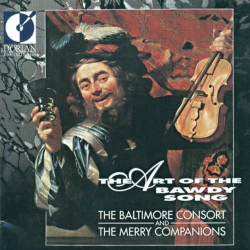
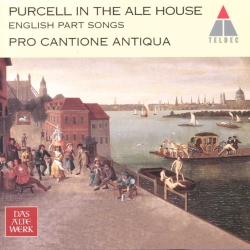
Copyright Ⓒ 2013 Davinci Finger. All rights reseved
Service Terms & Policy