


Giovanni Maria Casini
Released Album
Keyboard
Artist Info
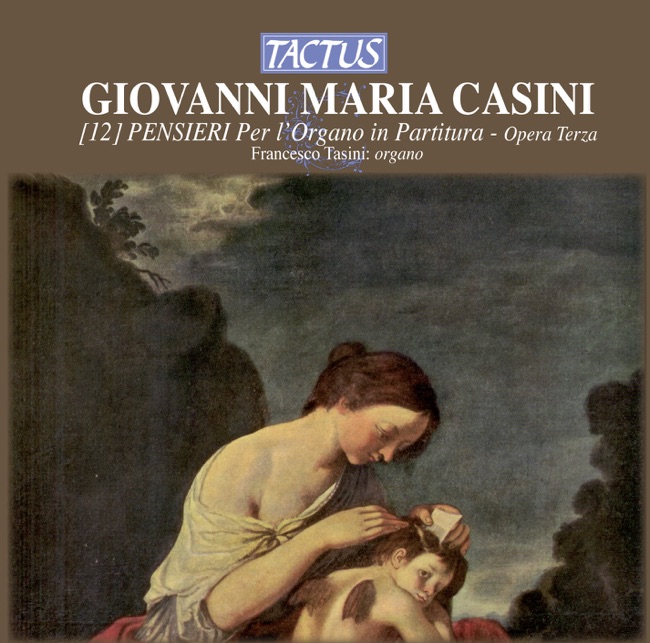
Role:ComposerBirth:1652Death:1719Giovanni Maria Casini was an Italian composer of the Baroque era, born in Florence in 1652. He was the son of a musician and began his musical education at a young age, studying with his father and later with the renowned composer and organist Bernardo Pasquini. Casini's early works were primarily vocal compositions, including sacred music for the church and secular songs for the theater. He quickly gained a reputation as a skilled composer and performer, and in 1675 he was appointed maestro di cappella at the Basilica of San Lorenzo in Florence. During his time at San Lorenzo, Casini composed a number of significant works, including his Missa a quattro voci, which was performed at the basilica in 1680. He also wrote a number of cantatas and oratorios, including La Passione di Cristo, which was performed in Florence in 1685. In 1686, Casini left San Lorenzo to take up a position as maestro di cappella at the Basilica of Santa Maria Maggiore in Rome. While in Rome, he continued to compose sacred music, including a number of masses and motets. He also wrote a number of secular works, including operas and chamber music. One of Casini's most significant works from this period was his oratorio La Giuditta, which was first performed in Rome in 1691. The work tells the story of the biblical heroine Judith, who saves her people by seducing and killing the Assyrian general Holofernes. La Giuditta was well-received by audiences and helped to establish Casini's reputation as a composer of oratorios. In 1693, Casini returned to Florence, where he was appointed maestro di cappella at the Cathedral of Santa Maria del Fiore. During his time at the cathedral, he composed a number of significant works, including his Missa a quattro voci con violini, which was performed in 1695. Casini's later works were primarily instrumental, including a number of sonatas for various instruments. He also wrote a number of concertos, including his Concerto a quattro in D major, which was performed in Florence in 1703. Casini died in Florence in 1719, leaving behind a significant body of work that included both sacred and secular music. His compositions were known for their expressive melodies and intricate harmonies, and he was considered one of the leading composers of his time. Today, Casini's music is still performed and recorded by musicians around the world, and he is remembered as one of the most important composers of the Baroque era.More....
Recent Artist Music
Copyright Ⓒ 2013 Davinci Finger. All rights reseved
Service Terms & Policy