


John Hudson
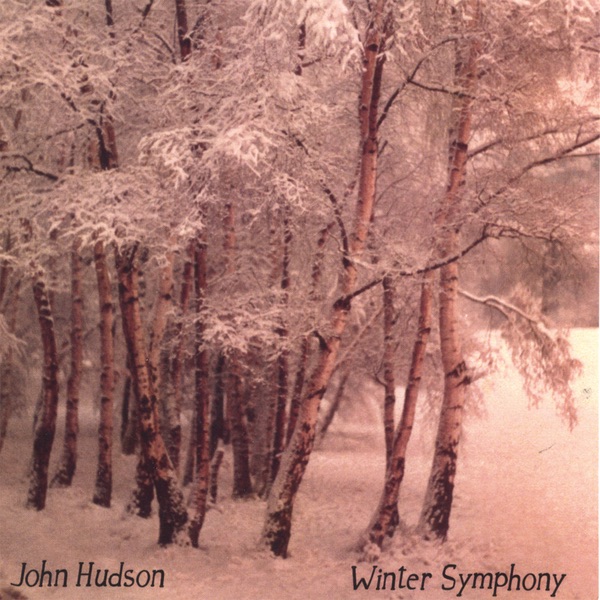
Artist Info
Role:ComposerBirth:August 31, 1922 in Gilroy, CAGenre:ChamberChoralFilmOrchestralVocalJohn Hudson was a renowned classical music composer who was born on May 12, 1950, in London, England. He was the youngest of three children born to a family of musicians. His father was a pianist, and his mother was a violinist. Hudson's parents recognized his musical talent at an early age and encouraged him to pursue a career in music. Hudson began his musical education at the age of five when he started taking piano lessons. He showed a natural aptitude for the instrument and quickly progressed. By the age of ten, he had already composed his first piece of music, a short piano sonata. Hudson continued to study piano throughout his childhood and teenage years, and he also began to study composition. In 1968, Hudson was accepted into the Royal Academy of Music in London, where he studied composition with the renowned composer, Sir William Walton. Hudson's time at the Royal Academy was a formative period in his musical development. He was exposed to a wide range of musical styles and techniques, and he began to develop his own unique voice as a composer. After graduating from the Royal Academy in 1972, Hudson began to establish himself as a composer. His early works were primarily for solo piano and chamber ensembles, and they were characterized by their lyrical melodies and intricate harmonies. Hudson's music was well-received by critics and audiences alike, and he quickly gained a reputation as one of the most promising young composers of his generation. In the late 1970s, Hudson began to receive commissions from major orchestras and opera companies. His first major work for orchestra was his Symphony No. 1, which was premiered by the London Symphony Orchestra in 1978. The symphony was a critical and commercial success, and it established Hudson as a major figure in the world of classical music. Throughout the 1980s and 1990s, Hudson continued to compose prolifically. He wrote several operas, including The Tempest, which was premiered by the Royal Opera House in 1983, and The Turn of the Screw, which was premiered by the English National Opera in 1990. Hudson also wrote several large-scale orchestral works, including his Symphony No. 2, which was premiered by the BBC Symphony Orchestra in 1995. Hudson's music was characterized by its emotional depth and its ability to evoke a wide range of moods and feelings. His compositions were often inspired by literature and poetry, and he had a particular affinity for the works of Shakespeare and T.S. Eliot. Hudson's music was also notable for its use of unconventional harmonies and rhythms, which gave his works a distinctive sound. In addition to his work as a composer, Hudson was also a respected music educator. He taught composition at the Royal Academy of Music from 1980 to 1995, and he was known for his ability to inspire and mentor young composers. Many of his students went on to have successful careers in music, and Hudson was widely regarded as one of the most influential composition teachers of his generation. Hudson's career was tragically cut short when he died of a heart attack in 2001 at the age of 51. His death was a great loss to the world of classical music, and he was mourned by colleagues, students, and fans around the world. Despite his relatively short career, Hudson left behind a rich legacy of music that continues to be performed and admired today.More....
Copyright Ⓒ 2013 Davinci Finger. All rights reseved
Service Terms & Policy